
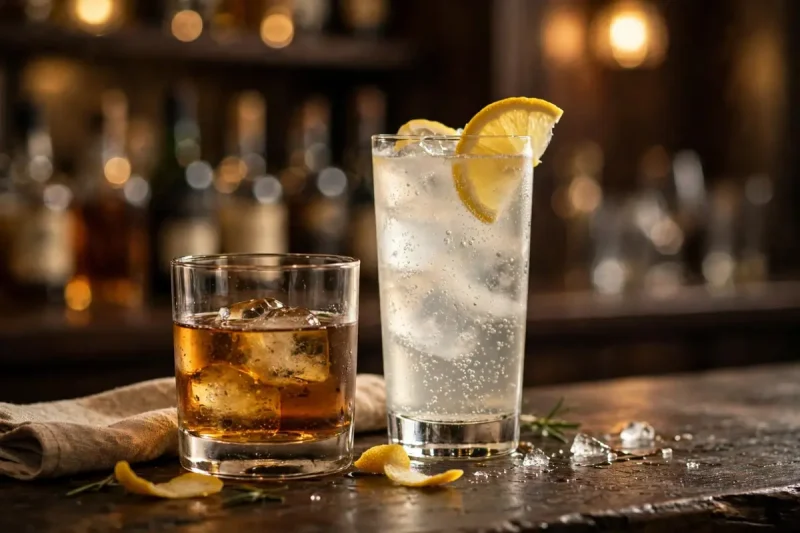

What is a chaser drink? In short, it is a milder drink that you sip straight after a shot or a small measure of a strong, neat spirit. Its job is simple. It softens the sharp taste, cools the burn, and leaves a pleasanter flavour in your mouth.
You might hear the word in a film, in a song, or across the bar in a pub, and wonder whether it means something technical. It does not. A chaser needs no special equipment, no recipe, and no skill. Instead, timing and purpose define it. If a drink follows a strong spirit immediately, and it is there to take the edge off, then it is a chaser.
This guide explains the meaning of the term, how a chaser is used, and how it differs from a mixer and a back. It also looks at popular examples, the famous beer-and-whisky boilermaker, and how the word is used in British pubs. Finally, it ends with a short, sensible note on pacing yourself and drinking water.
What Is a Chaser Drink? The Simple Definition
You take a chaser directly after another, stronger drink. Usually, the first drink is a shot of whisky, vodka, tequila, or another spirit, and you drink it quickly, without anything added. The chaser follows at once. Because it is milder, sweeter, or more refreshing, it changes the taste that the spirit leaves behind.
The idea is easy to picture. Spirits are strong, and a neat shot can taste hot, dry, or bitter, especially if you are not used to it. A few mouthfuls of something softer give your palate a rest. For many people, that is the whole point. They enjoy the spirit itself, but they prefer a gentler finish.
So, what is a chaser in drinking terms, exactly? It is not a type of drink in its own right. Almost any drink can become a chaser, depending on when and why you drink it. A glass of cola is simply cola on its own. However, the same glass, sipped straight after a shot, becomes a chaser. Context, rather than ingredients, makes the difference.
Chasers are usually non-alcoholic or lower in alcohol than the drink they follow, although that is not a strict rule. Beer is the classic exception, as the boilermaker tradition below shows. Portion size also varies. Some people take only a sip or two, while others keep a full glass beside their spirit for the whole round.
Chaser, Mixer or Back? Understanding the Difference
These three words sit close together, and people often confuse them. Yet each one describes a different way of serving and drinking. Once you know the difference, bar language becomes much easier to follow.
What is a mixer?
You mix a mixer into the spirit itself, in the same glass. Tonic water in a gin and tonic is a mixer. So is cola in a rum and cola, and lemonade in a vodka and lemonade. The spirit and the mixer become one drink, and you taste them together in every sip. By contrast, a chaser stays in its own glass, and you taste it separately, afterwards.
What is a back?
A back is a drink that sits alongside a neat spirit. You sip it alternately with the spirit, in your own time. A small jug of water with a whisky is a familiar example. In practice, the line between a back and a chaser when drinking whisky can be a fine one, and many drinkers use the words loosely. Still, timing is the clue. A chaser follows, while a back accompanies.
- Chaser: a separate, milder drink that you take straight after a shot or neat spirit.
- Mixer: a drink that you combine with a spirit in the same glass.
- Back: a drink that sits beside a spirit, and you sip it alongside the spirit as you go.
If you enjoy this kind of vocabulary, our guide to beverage consumption terms explains more of the language used around drinks and drinking.
Popular Chaser Examples
Almost any mild, pleasant drink can work as a chaser, and most pubs and home drinks cabinets already contain several good options. The most popular choices share a few qualities. They refresh you, you can drink them easily and quickly, and their flavour stands up well after a strong spirit.
- Beer: drinkers follow whisky with a lager, bitter, or ale in the oldest pairing on this list, and it has its own tradition, covered in the next section.
- Cola: sweet, fizzy, and familiar, cola makes a common chaser for whisky and rum shots.
- Lemonade: light and citrusy, lemonade suits vodka and other clear spirits well.
- Ginger ale: gently spiced and not too sweet, ginger ale partners whisky naturally.
- Tonic water: dry and bitter in a pleasant way, tonic works after gin and after other botanical spirits.
- Fruit juice: orange, pineapple, and cranberry juices follow vodka and tequila well, because their sweetness softens the spirit at once.
- Pickle juice: in some traditions, drinkers follow a whisky shot with a small drink of brine from a jar of pickles. Fans love its salty, sharp taste.
- Water: still or sparkling water is the simplest chaser of all. It adds nothing, hides nothing, and simply cleanses the palate.
Why sweet, fizzy and salty chasers work
Many of the most common choices are everyday soft drinks, because they are cheap, chilled, and available almost everywhere. Their fizz also helps. Bubbles feel refreshing after a neat spirit, and a cold soft drink contrasts clearly with a spirit at room temperature.
Sweetness is another reason these drinks work so well. A spirit on its own can taste severe. A sweet chaser balances that severity straight away, which is why juice and cola appear so often. On the other hand, some drinkers prefer the opposite approach. They choose something dry, bitter, or salty, such as tonic or pickle juice, because the contrast itself refreshes them.
The Boilermaker: Beer as a Chaser
The best-known chaser tradition of all pairs beer with whisky. A boilermaker is a beer with a shot of whisky. Drinkers either drink the whisky first and follow it with the beer, or drop the shot into the beer and drink the two together. The first version is the classic chaser arrangement.
The pairing makes practical sense. Beer is milder than whisky, pubs usually serve it cold, and a glass of beer lasts far longer than a shot. So the beer both chases the whisky and gives the drinker something to settle with afterwards. In Britain, the same idea appears in the long-standing pub habit of a half of bitter or lager alongside a whisky. Drinkers sometimes order that half as a whisky chaser.
American bars made the name boilermaker famous, but the underlying custom is much broader. Wherever bars serve strong spirits and beer, drinkers have paired them in this way. It is less a formal recipe than a piece of pub culture, and drinkers pass it on by example rather than by instruction.
How the Term Is Used in British Pubs
In a British pub, people understand the word chaser in a relaxed, practical way. Someone might order a whisky with a beer chaser, or ask for a lemonade chaser with a shot. The member of staff then brings two separate drinks, and everyone knows what the order means. Nobody needs an explanation.
You are most likely to hear the term when people order shots, or when a drinker wants a long, soft drink to sit alongside a short, strong one. It also appears in conversation and storytelling, where a chaser when drinking shots forms part of the scene. Outside the pub, the word turns up in quizzes, crossword clues, films, and songs, which is why many people meet it long before they ever order one.
British pub language is full of short words like this, where one term carries a clear instruction. It rewards a little knowledge, in much the same way that knowing what it means to decant a bottle helps you follow a conversation about wine. Once you learn these words, you hardly ever forget them, because each one links to a simple, visible action.
Choosing a Chaser That Works Well
No single correct choice exists, but a few simple principles make the decision easier. First, think about strength. The chaser should feel milder than the spirit, otherwise it cannot do its job. Secondly, think about contrast. Cold after warm, sweet after dry, and fizzy after still all work well, because the change itself refreshes your mouth.
Next, match the flavours in a broad way. Ginger ale and cola flatter dark spirits such as whisky and rum. Lemonade and fruit juices suit clear spirits such as vodka. Tonic suits gin, and beer suits whisky in the traditional way described above. These are habits, not rules, so personal taste should always win.
Finally, keep it simple and keep it ready. A chaser only works if it is there at the right moment, poured and within reach before you drink the shot. A small glass is often enough. You can always pour more, and a modest chaser is less likely to go to waste than a large one that nobody finishes.
A Short Note on Drinking Responsibly
A chaser can make a strong drink taste pleasanter, but it does not make the alcohol in that drink any weaker. The spirit you have drunk is still the same spirit, whatever follows it. For that reason, it is sensible to pace yourself, however you choose to drink.
Simple habits help. Sip water alongside alcoholic drinks, eat before or while you drink, and leave time between rounds. Know when to stop, look out for the people you are with, and never drive after drinking. If a soft drink or a glass of water is the drink you actually want next, choose it as your chaser, and then stop there. That is always a respectable decision.
Final Thoughts
So, what is a chaser drink? It is a milder drink that you take straight after a shot or a strong neat spirit, to soften the taste and refresh your palate. You do not mix it into the spirit, like a mixer, and it does not simply sit beside the spirit, like a back. From beer in a boilermaker to cola, lemonade, ginger ale, juice, and even pickle juice, the examples are familiar drinks that people use in a particular way, at a particular moment. Now that you know the term, you will recognise it whenever people use it, in a British pub and well beyond it.
