
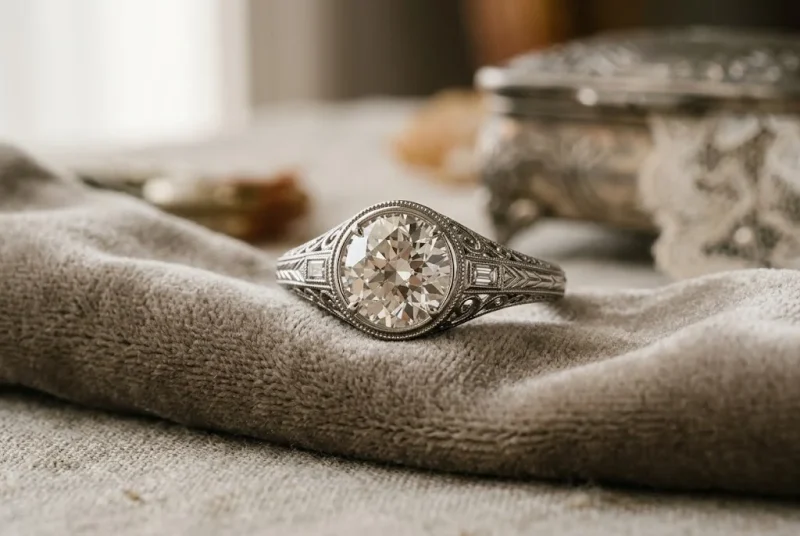

A vintage engagement ring can have a quality that is difficult to reproduce with a purely contemporary design. Instead of relying on current trends, vintage-inspired jewelry often draws from established design traditions, using proportions, craftsmanship and decorative details that have remained appealing across generations.
For some people, the attraction is historical character. For others, it is the sense that the ring feels personal and distinctive rather than mass-produced. Details such as milgrain, filigree, engraved metalwork, geometric halos and unusual stone arrangements can give an engagement ring an individual identity.
A vintage-inspired design can also be practical for modern life. Today’s jewelers can recreate historical details using contemporary techniques and secure settings, allowing shoppers to enjoy an older aesthetic without necessarily accepting the fragility of a genuine antique.
If you are considering a colored center stone, sapphire is especially well suited to vintage-inspired designs. Our vintage sapphire engagement ring guide explores how sapphire, Art Deco geometry, old-cut character and fine detailing work together.
What Makes a Ring Look Vintage?
The word “vintage” can describe many different styles, so it is useful to understand what actually creates a vintage appearance.
Common characteristics include:
- Detailed metalwork
- Milgrain edges
- Filigree
- Engraving
- Decorative shoulders
- Halo settings
- Unusual stone arrangements
- Symmetry
- Historical proportions
- Antique-inspired cuts
A ring does not need to contain every one of these details.
In fact, the most convincing designs often use a limited number of elements that work together naturally.
A simple ring with carefully executed milgrain can feel more authentically vintage than an overly decorated piece that combines unrelated historical references.
Vintage vs Antique: What’s the Difference?
These terms are often used interchangeably, but they are not identical.
An antique ring is generally an older piece with genuine historical age.
A vintage-inspired ring is newly made but takes design inspiration from an earlier period.
A vintage ring can also refer to a genuine older piece, depending on the context in which the term is used.
This distinction matters when shopping because a newly manufactured ring inspired by an older style may offer modern construction, sizing options and gemstone choices that are harder to find in genuine antique jewelry.
If authenticity and historical provenance matter to you, ask the seller whether the ring is actually old or simply inspired by a particular period.
Understanding Different Vintage Jewelry Eras
Vintage engagement-ring design can draw inspiration from several different periods.
Edwardian-Inspired Designs
Edwardian jewelry is often associated with delicate metalwork, intricate details and light, airy arrangements.
Platinum became increasingly important during this period, allowing jewelers to create fine decorative structures.
An Edwardian-inspired engagement ring can feel elegant and intricate without relying heavily on bold geometry.
Art Deco Designs
Art Deco is known for strong geometry, symmetry and architectural forms.
Common features include:
- Stepped shapes
- Straight lines
- Geometric halos
- Symmetrical arrangements
- Contrasting colors
- Milgrain
- Strong visual structure
If this is your preferred aesthetic, our Art Deco sapphire ring guide explores the movement’s design principles and why sapphire works particularly well with them.
Mid-Century-Inspired Designs
Later vintage styles can introduce softer curves, simpler settings and more expressive stone arrangements.
These designs can be useful for shoppers who want a vintage feel without the intricate metalwork associated with earlier periods.
Understanding the design language you prefer can make shopping much easier.
Choosing a Vintage Engagement Ring Setting
The setting determines both the appearance and practicality of an engagement ring.
Solitaire
A vintage-inspired solitaire keeps the center stone as the main focus.
Decorative shoulders or subtle engraving can add historical character without overwhelming the gemstone.
Halo
A halo surrounds the center stone with smaller stones.
This can make the center appear larger while providing additional sparkle.
Vintage-inspired halos often have geometric or scalloped outlines rather than perfectly modern circular forms.
Three-Stone
A three-stone arrangement can have a classic appearance while providing space for decorative details.
The side stones can also create symmetry around the center.
Bezel
A bezel surrounds the edge of the gemstone with metal.
This can create a distinctive vintage appearance while offering additional protection around the stone.
Cluster
Cluster designs use multiple stones grouped closely together.
They can create an ornate appearance and are particularly associated with certain historical jewelry traditions.
Why Milgrain Is Important in Vintage Design
Milgrain is one of the easiest details to recognize in vintage-inspired jewelry.
It consists of tiny beads placed along the edge of a metal surface.
The effect is subtle but adds texture and visual interest.
On an engagement ring, milgrain can be used around:
- The center stone
- Halo edges
- Shoulder details
- Decorative borders
- Filigree patterns
Good milgrain should appear even and intentional.
Poorly executed milgrain can make a ring look rough rather than refined.
The Role of Filigree
Filigree is another classic vintage jewelry technique.
Instead of creating a completely solid metal surface, the jeweler forms delicate patterns and openwork.
This allows light to move through the design and can make a detailed ring appear lighter.
Filigree is particularly useful underneath the center stone or along the shoulders because it adds interest without necessarily increasing the visual size of the ring.
Choosing the Right Center Stone
Although diamonds remain common in engagement rings, vintage-inspired designs can accommodate many different gemstones.
Popular choices include:
- Sapphire
- Ruby
- Emerald
- Diamond
- Moissanite
- Other colored gemstones
Sapphire is particularly interesting because its deep blue color works well with both traditional and geometric settings.
If you want a more detailed explanation of choosing a sapphire center stone, our sapphire engagement ring guide covers color, shape, setting, metal, durability and other buying considerations.
Why Sapphire Works So Well With Vintage Style
Sapphire has a visual character that naturally complements older-inspired jewelry.
Its rich color can make a simple setting feel distinctive, while its association with loyalty and permanence adds symbolic depth.
When combined with milgrain, filigree or geometric metalwork, sapphire can create a ring that feels established rather than purely contemporary.
This is especially effective in Art Deco-inspired designs, where a strong blue center can become the visual anchor of a symmetrical composition.
Choosing the Right Metal
The metal can dramatically change the mood of a vintage engagement ring.
Platinum
Platinum can create a bright, refined appearance and works well with intricate detailing.
It is especially associated with many classic fine-jewelry designs.
White Gold
White gold provides a clean contrast against colored gemstones and can suit both vintage and contemporary interpretations.
Yellow Gold
Yellow gold creates warmth and can strengthen the traditional character of a ring.
It can be particularly effective when paired with sapphire, ruby or other colored gemstones.
Rose Gold
Rose gold offers a softer interpretation of vintage style.
Its warm pink tone can create an interesting contrast with blue sapphire and can make geometric designs feel less severe.
How to Make a Vintage Ring Feel Modern
You do not have to reproduce an old ring exactly to achieve a vintage look.
One effective approach is to combine historical details with contemporary proportions.
For example, you might choose:
- A traditional gemstone shape with a low-profile setting
- Modern construction with vintage engraving
- Simple geometry with subtle milgrain
- A classic center stone with contemporary side details
This approach creates a ring that references the past without feeling like a costume piece.
The goal is not to make the ring look old.
The goal is to make it feel timeless.
How to Spot Good Vintage-Inspired Craftsmanship
A convincing vintage-inspired ring should hold up when viewed closely.
Look for consistency in the details.
Examine the Milgrain
The tiny beads should be evenly spaced and carefully finished.
Check the Symmetry
If the design is geometric, both sides should feel balanced.
Look at the Filigree
Openwork should actually be open and should not appear like a flat decorative stamp.
Examine the Stone
The center gemstone should complement the setting rather than looking like an unrelated addition.
Check the Proportions
A good ring should look balanced from both the top and side views.
Quality becomes especially important in detailed vintage-inspired designs because imperfections are more noticeable when there are many decorative elements.
Choosing a Vintage Ring for Everyday Wear
A ring can look delicate without actually being impractical, but daily use still needs to be considered.
If you plan to wear your engagement ring continuously, think about:
- Setting height
- Stone security
- Metal durability
- Delicate decorative elements
- Your work environment
- Your normal activities
A low-profile setting can be more practical for someone who frequently uses their hands.
A higher setting may create more visual drama but can catch on clothing or objects.
There is no universally perfect setting. The right choice depends on the wearer.
Genuine Vintage or New Vintage-Inspired?
This is one of the most important decisions for shoppers.
Genuine Vintage
A genuine vintage ring can have authentic historical character and provenance.
However, it may have signs of wear, previous repairs, resizing limitations or harder-to-replace components.
New Vintage-Inspired
A newly made ring can provide the appearance of vintage jewelry while offering modern sizing, construction and gemstone choices.
It may also be easier to customize.
The right choice depends on whether historical authenticity or practical flexibility is more important to you.
How Much Should You Spend?
There is no single correct budget for a vintage engagement ring.
Price can depend on:
- Center gemstone
- Gemstone size
- Metal
- Craftsmanship
- Brand
- Age
- Provenance
- Certification
- Decorative complexity
Avoid assuming that the most expensive ring is automatically the best.
A well-proportioned ring with a beautiful center stone and excellent craftsmanship may be more satisfying than a larger but poorly constructed design.
Set a realistic budget first, then compare options within that range.
Questions to Ask Before Buying
Before purchasing a vintage or vintage-inspired engagement ring, ask:
- Is the ring genuinely vintage or newly made?
- What gemstone is used?
- Is the stone natural or lab-created?
- Has the gemstone been treated?
- What metal is the setting?
- How is the center stone secured?
- Is the ring suitable for everyday wear?
- Is certification available?
- Can the ring be resized?
- What care does the design require?
Clear answers can prevent misunderstandings and make it easier to compare different pieces.
Common Mistakes to Avoid
Choosing Appearance Over Construction
A ring may look beautiful but still have weak settings or delicate areas unsuitable for everyday use.
Assuming Vintage Means Antique
Always clarify whether the ring is genuinely old or simply inspired by an earlier period.
Ignoring the Side Profile
The top view gets most of the attention, but the side profile can reveal important information about setting height and construction.
Buying Without Understanding the Gemstone
Learn about the center stone’s color, treatment, durability and origin before purchasing.
Overloading the Design
Too many decorative elements can make a ring feel visually confused.
The best vintage-inspired designs use details selectively.
How to Create an Heirloom Look
An heirloom-quality appearance is usually the result of several elements working together.
Consider:
- A durable center gemstone
- Balanced proportions
- High-quality metalwork
- Timeless design
- Carefully executed decorative details
- A setting suitable for long-term wear
Sapphire can be especially effective because its color and historical associations naturally support the idea of a ring intended to remain meaningful for generations.
Caring for a Vintage-Style Engagement Ring
Regular care is important, particularly when the design includes delicate details.
Remove the ring during activities that could cause excessive impact.
Keep it away from unnecessary exposure to harsh chemicals.
Store it separately from other jewelry to reduce scratching.
Check the setting periodically for loose stones or worn components.
Professional inspections can also help identify problems before they become expensive repairs.
Frequently Asked Questions
What makes a vintage engagement ring look timeless?
Balanced proportions, quality craftsmanship and established design elements such as milgrain, filigree, geometric shapes and carefully chosen gemstones can help a ring remain attractive beyond short-term trends.
Is a vintage engagement ring suitable for everyday wear?
Yes, but the setting and construction should be appropriate for regular use. Lower-profile and securely constructed designs can be especially practical.
What gemstone is best for a vintage engagement ring?
There is no single best option. Diamonds are traditional, while sapphire and other colored gemstones can provide a more distinctive appearance.
Are vintage-inspired rings the same as antique rings?
No. An antique ring is genuinely old, while a vintage-inspired ring is newly made using design elements associated with an earlier period.
Is Art Deco a vintage style?
Art Deco is a specific historical design movement rather than a general synonym for vintage. Its strong geometry and symmetry make it one of the most recognizable vintage-inspired aesthetics.
Is sapphire suitable for an engagement ring?
Yes. Sapphire offers strong color, good durability and a long history in fine jewelry, making it a popular alternative to traditional diamond center stones.
How can I tell if vintage-inspired jewelry is well made?
Look for consistent milgrain, balanced symmetry, properly finished filigree, secure stone settings and coherent proportions.
Final Thoughts
A vintage engagement ring can offer something that many contemporary designs struggle to reproduce: a sense of character.
The appeal comes from more than simply making a ring look old. It comes from using thoughtful proportions, meaningful details and established design principles that continue to work across generations.
Whether you prefer delicate Edwardian-inspired craftsmanship, strong Art Deco geometry or a softer mid-century influence, the best vintage-inspired design should feel intentional rather than overloaded.
For shoppers interested in sapphire, a vintage sapphire engagement ring can bring together the heirloom character of vintage styling with the rich color and durability of sapphire.
For those who prefer geometric design, our Art Deco sapphire ring guide offers a closer look at symmetry, milgrain, filigree and other defining features.
And if you are still comparing gemstones and settings, our sapphire engagement ring guide provides a broader framework for making a confident choice.
The most successful vintage engagement ring is ultimately one that feels natural to the person wearing it. When craftsmanship, gemstone, setting and personal style all work together, the result can remain meaningful for many years to come.
