
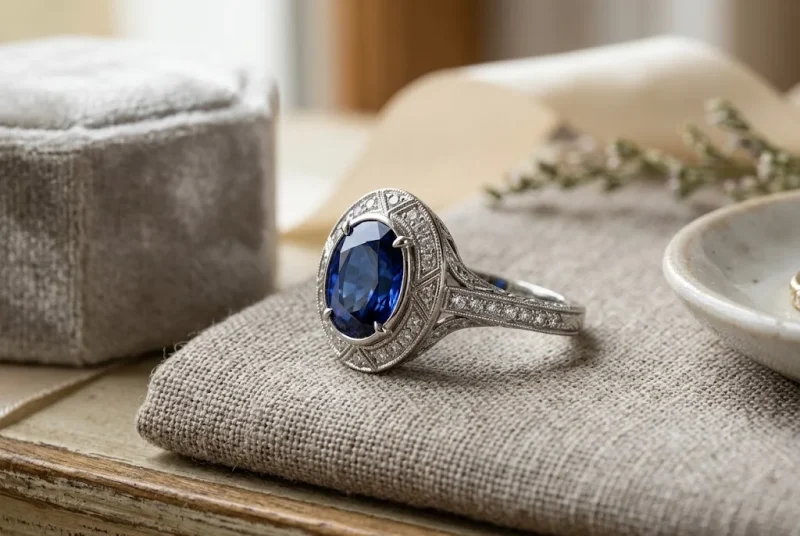

A sapphire engagement ring offers a distinctive alternative to the traditional diamond ring. Known for its rich color, enduring appeal and association with loyalty and commitment, sapphire has remained a popular choice for people who want an engagement ring with personality.
The appeal goes beyond the gemstone itself. The setting, cut, metal, proportions and overall design can completely change the character of a ring. A deep blue sapphire surrounded by delicate detailing can feel romantic and traditional, while a clean modern setting can look contemporary and understated.
For shoppers drawn to older design traditions, sapphire also works particularly well with vintage-inspired details. Art Deco geometry, milgrain edges, filigree and antique-style proportions can give a ring an heirloom character without requiring an actual antique piece.
If you are considering a sapphire engagement ring, understanding the stone and the different design choices can make it easier to find something that suits your style, lifestyle and expectations.
Why Choose a Sapphire Engagement Ring?
Sapphire has a long history in fine jewelry and is often associated with qualities such as loyalty, sincerity and permanence.
Its strong blue color gives an engagement ring an immediate visual identity. Unlike a traditional colorless center stone, sapphire introduces a distinct hue that can make even a relatively simple setting feel memorable.
Another attraction is versatility. Sapphire can work with yellow gold, white gold, rose gold and platinum, while different cuts can create very different appearances.
Some people prefer an oval sapphire for a classic look, while others may choose a cushion, round, emerald or pear-shaped stone depending on the overall design.
For anyone particularly attracted to historic jewelry aesthetics, a vintage sapphire engagement ring can combine the color of sapphire with Art Deco geometry, milgrain, filigree and antique-inspired detailing.
Understanding Sapphire Color
Color is one of the most important considerations when choosing a sapphire.
Blue sapphires can range from very pale blue to extremely deep shades. The preferred color is ultimately personal, but the way a sapphire interacts with light can have a major effect on how the ring looks.
Deep Blue Sapphires
A saturated blue sapphire can create a dramatic and luxurious appearance.
Deep color often works particularly well with vintage-inspired settings because it creates a strong contrast against delicate metalwork.
Medium Blue Sapphires
Medium-blue stones can provide a balance between richness and brightness.
They can be versatile enough to work with both traditional and contemporary settings.
Lighter Blue Sapphires
Lighter shades can create a softer and more understated appearance.
They may appeal to shoppers who want the character of sapphire without an intensely dark center stone.
The most important thing is to view the stone under different lighting conditions rather than judging it from a single photograph.
Sapphire Cut and Shape
The shape of a sapphire has a major influence on the overall appearance of an engagement ring.
Oval Sapphire
Oval sapphires are popular because they combine traditional elegance with a slightly elongated appearance.
An oval stone can also create the impression of a larger center when viewed from above.
Cushion Sapphire
Cushion cuts have softly rounded corners and can create a romantic, classic appearance.
They are particularly compatible with vintage and antique-inspired settings.
Round Sapphire
Round stones have a timeless appearance and can work well in both simple and elaborate designs.
Their symmetry makes them suitable for settings where the center stone is intended to be the main visual focus.
Emerald-Cut Sapphire
An emerald cut creates broad, step-like facets rather than the intense sparkle associated with brilliant cuts.
The result can feel sophisticated and architectural, making this shape interesting for shoppers who appreciate Art Deco design.
Pear-Shaped Sapphire
Pear-shaped stones introduce a more distinctive silhouette and can create an elegant, elongated appearance.
The choice between shapes should ultimately depend on personal style and how the stone interacts with the intended setting.
Choosing the Right Sapphire Engagement Ring Setting
The setting protects the gemstone while also determining the ring’s overall visual character.
Solitaire Setting
A solitaire places most of the attention on the sapphire itself.
This can be a good choice for shoppers who prefer simplicity and want the stone’s color to remain the dominant feature.
Halo Setting
A halo surrounds the central sapphire with smaller stones.
This can make the center appear larger while adding additional sparkle and visual complexity.
Three-Stone Setting
A three-stone design places the main sapphire between two additional stones.
The arrangement can have symbolic appeal and provides a balanced appearance from above.
Bezel Setting
A bezel surrounds the edge of the sapphire with metal.
This can provide a streamlined appearance while offering additional protection around the gemstone.
Vintage-Inspired Setting
Vintage-inspired settings often incorporate milgrain, filigree, engraved details and decorative shoulders.
These elements can make the ring feel as though it belongs to another era while still being produced using contemporary techniques.
If this aesthetic appeals to you, our guide to the vintage sapphire engagement ring explores why Art Deco geometry, old-cut character and fine detailing continue to attract attention.
Art Deco Sapphire Engagement Rings
Art Deco jewelry is particularly well suited to sapphire because the gemstone’s strong color works beautifully with geometric design.
Art Deco-inspired rings often feature:
- Symmetrical layouts
- Straight lines
- Stepped shapes
- Geometric halos
- Milgrain detailing
- Filigree
- Contrasting stones
- Architectural proportions
The result is usually structured rather than overly ornate.
A sapphire placed inside a geometric setting can create a strong central focal point while allowing the surrounding details to frame the stone.
For shoppers who specifically love this period of design, an Art Deco sapphire ring can provide a more focused approach to the style.
What Is Milgrain?
Milgrain is a decorative technique involving tiny beads of metal placed along an edge.
It is frequently associated with vintage and Art Deco jewelry because it adds texture without overwhelming the main design.
On a sapphire engagement ring, milgrain can create a subtle contrast between the smooth surface of the gemstone and the detailed metalwork surrounding it.
The effect is often most noticeable when the ring is viewed closely.
What Is Filigree?
Filigree involves delicate metalwork arranged into decorative patterns or open structures.
It can make an engagement ring appear intricate without making the entire piece visually heavy.
In vintage-inspired designs, filigree may appear beneath the center stone, along the shoulders or around the halo.
When well executed, it can create depth and allow light to move through parts of the setting.
Sapphire Versus Diamond for an Engagement Ring
One of the most common questions is whether sapphire is a better choice than diamond.
There is no universal answer.
A diamond offers traditional brilliance and a classic colorless appearance. Sapphire provides strong color and a more distinctive visual identity.
The decision often comes down to personal taste.
Choose sapphire if you want:
- A colored center stone
- A distinctive alternative to traditional diamonds
- A classic gemstone with historical associations
- A strong connection to blue jewelry
- A potentially more unusual engagement-ring appearance
Choose diamond if you prefer:
- Traditional colorless brilliance
- Maximum emphasis on sparkle
- A classic engagement-ring aesthetic
- A wider range of conventional diamond styles
Neither option is automatically better. The right gemstone is the one that fits the wearer’s preferences.
How Durable Is Sapphire for Everyday Wear?
Sapphire is a hard gemstone and is generally well suited to jewelry that is worn regularly.
However, hardness does not mean a sapphire is impossible to damage.
The setting also matters. A poorly protected stone can be more vulnerable to impact than one secured in a well-designed setting.
For an engagement ring intended for everyday wear, consider:
- The security of the setting
- The height of the center stone
- The protection around the edges
- The quality of the metalwork
- The wearer’s daily activities
A ring can be beautiful and practical at the same time when the design is properly matched to everyday use.
Choosing the Right Metal
The metal surrounding the sapphire can change how its color appears.
White Metals
White gold and platinum can create a crisp contrast against blue sapphire.
This combination often suits contemporary and Art Deco-inspired designs.
Yellow Gold
Yellow gold produces a warmer contrast.
It can make a sapphire engagement ring feel traditional and can work especially well with vintage-inspired aesthetics.
Rose Gold
Rose gold provides a softer, warmer appearance.
The combination of pink-toned metal and blue sapphire can create an unusual but elegant contrast.
The best choice depends on your existing jewelry, personal taste and the overall mood you want the engagement ring to create.
Natural Sapphire or Lab-Created Sapphire?
Sapphires can come from natural sources or be created in laboratories.
Natural sapphires form underground through geological processes and can vary considerably in color, clarity and origin.
Lab-created sapphires have essentially the same chemical composition and crystal structure as natural sapphire but are produced through controlled processes.
For buyers, the important thing is transparency.
Ask for clear information about the stone’s origin, treatments and certification where appropriate.
Do not assume that a higher price automatically means a better-looking stone. Color, cut, clarity, size and overall design all influence how a sapphire appears.
Sapphire Treatments and What Buyers Should Know
Many sapphires available in the jewelry market have undergone treatments to improve their color or clarity.
Heat treatment is common in the sapphire industry.
There is nothing inherently wrong with purchasing a treated sapphire, but buyers should know what they are purchasing.
When comparing stones, ask the jeweler:
- Is the sapphire natural or lab-created?
- Has it been treated?
- Is the treatment disclosed?
- Is certification available?
- Where did the stone originate?
- How does the treatment affect care requirements?
Clear information helps shoppers compare stones fairly.
How to Evaluate Sapphire Quality
Sapphire quality involves more than simply looking at size.
Consider the following factors together:
Color
Color is often the most visually important characteristic.
Look for a shade that appeals to you and remains attractive under different lighting.
Cut
A well-cut stone should interact effectively with light.
An attractive color can lose some of its impact if the cut is poorly proportioned.
Clarity
Some inclusions are natural characteristics of gemstones. The important question is whether they affect appearance or durability.
Size
A larger sapphire is not automatically a better sapphire.
A smaller stone with excellent color and proportions may look more attractive than a larger stone with less appealing characteristics.
Origin and Treatment
If these factors matter to you, ask for documentation and professional disclosure.
How to Choose a Timeless Sapphire Ring
Trends can change quickly, but certain design principles remain attractive for decades.
A timeless sapphire engagement ring often has:
- Balanced proportions
- Quality metalwork
- A well-chosen center stone
- Functional setting details
- A design that does not depend entirely on a temporary trend
Vintage-inspired designs can be particularly successful because their visual language is already rooted in established jewelry traditions.
If you are interested in the wider concept of vintage jewelry, our guide to vintage engagement rings explains how to recognize designs that feel genuinely timeless rather than simply decorated with retro details.
Matching the Ring to Your Lifestyle
The most beautiful ring is not necessarily the best ring for every wearer.
Consider how the ring will be used.
Someone who works at a desk may have different requirements from someone who works with their hands.
A high-set stone can create a dramatic appearance but may catch more easily on clothing.
A lower-profile setting may be more practical for someone who wants to wear the ring continuously.
People who participate in sports, manual work or other activities should also consider when the ring should be removed.
Thinking about daily life before choosing a design can prevent regret later.
How to Care for a Sapphire Engagement Ring
Regular care can help preserve both the gemstone and setting.
Simple practices include:
- Remove the ring during heavy manual work.
- Avoid exposing it unnecessarily to harsh chemicals.
- Clean it according to the jeweler’s recommendations.
- Check the setting periodically.
- Store it separately from harder jewelry that could cause scratches.
- Have the ring professionally inspected when appropriate.
The sapphire itself may be highly durable, but the surrounding metal and smaller stones can still require attention.
Common Mistakes When Buying a Sapphire Engagement Ring
Choosing Size Over Quality
A larger gemstone is not automatically more beautiful.
Color and cut often have a greater visual impact.
Ignoring the Setting
A beautiful sapphire in an unsuitable setting may not provide the look or practicality you want.
Buying Without Understanding Treatments
Always ask whether the gemstone has been treated.
Following Trends Too Closely
An engagement ring is likely to be worn for many years. Consider whether you will still enjoy the design beyond the current fashion cycle.
Focusing Only on the Center Stone
The shoulders, halo, metal and craftsmanship all contribute to the finished appearance.
A Sapphire Ring as an Heirloom
Part of sapphire’s appeal comes from its ability to look established even when it is newly made.
Its deep color and historical associations can give an engagement ring an heirloom character.
That feeling becomes even stronger when sapphire is paired with vintage-inspired details such as milgrain, filigree and Art Deco geometry.
For anyone interested in how gemstones have accumulated meaning across different cultures and eras, this long history behind engagement gemstones provides useful historical context.
Frequently Asked Questions
Is sapphire a good choice for an engagement ring?
Yes. Sapphire combines strong visual character with good durability and a long history in fine jewelry, making it a popular alternative to traditional diamond engagement rings.
What color sapphire is best for an engagement ring?
Blue is the classic choice, but the ideal shade is personal. Medium to deeply saturated blue can create a rich appearance, while lighter shades offer a softer look.
Are sapphire engagement rings durable?
Sapphire is a hard gemstone and can work well for everyday jewelry. However, the security and quality of the ring’s setting are also important.
Is a sapphire engagement ring more unusual than a diamond?
Generally, yes. Sapphire provides a colored center stone and can give an engagement ring a more distinctive appearance than a traditional colorless diamond.
Are vintage sapphire engagement rings still fashionable?
Yes. Vintage-inspired designs remain popular because Art Deco geometry, milgrain, filigree and heirloom styling can feel distinctive without depending on short-term trends.
What metal looks best with blue sapphire?
White metals create a crisp contrast, yellow gold creates a warmer traditional appearance, and rose gold provides a softer contrast. The best choice depends on personal preference.
Should I choose a natural or lab-created sapphire?
Both can be worthwhile choices. Compare color, cut, quality, treatment, origin and documentation rather than focusing on one characteristic alone.
Final Thoughts
A sapphire engagement ring can combine individuality, history and everyday elegance in a way that makes it stand apart from more conventional engagement-ring choices.
The gemstone’s color is only the beginning. The cut, setting, metal, proportions and decorative details all contribute to the final character of the ring.
For shoppers who prefer historic design, Art Deco geometry, milgrain and filigree can add an especially distinctive quality. Those details can also connect a new ring with the visual language of older jewelry without requiring an actual antique.
If your preference leans toward this aesthetic, explore our vintage sapphire engagement ring guide for a closer look at old-cut character, Art Deco styling and heirloom appeal.
For a more focused look at geometric vintage design, continue with our Art Deco sapphire ring guide.
And if you are comparing broader vintage styles, our vintage engagement ring guide can help you understand what makes a ring feel timeless.
The best choice is ultimately one that reflects the person wearing it. A thoughtfully selected sapphire, paired with a well-made setting and a style that feels natural rather than forced, can become a piece of jewelry that remains meaningful long after the proposal itself.
