
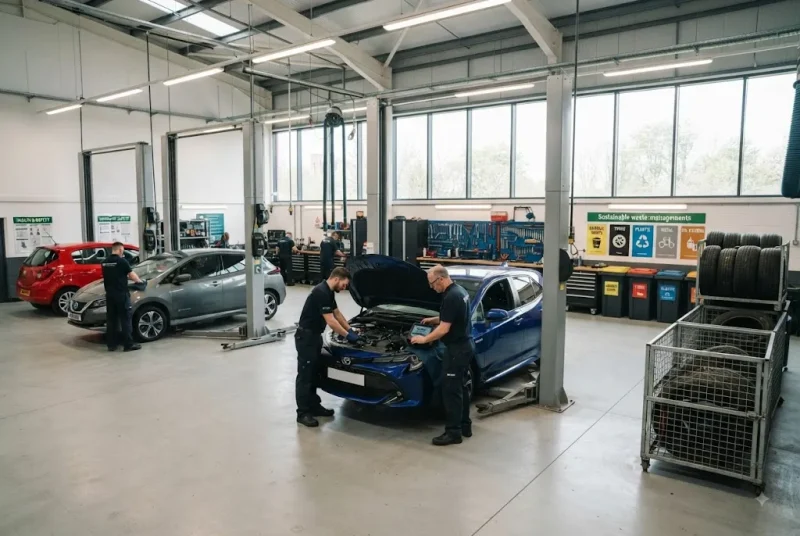

Garage chains are becoming increasingly important in the UK’s move towards more responsible automotive services. Large networks handle significant volumes of tyres, batteries, oils, replacement parts and vehicle repairs, which means their environmental decisions can have an impact well beyond an individual workshop. For motorists, sustainability is therefore becoming another factor to consider alongside price, convenience, service quality and technical expertise.
From tyre recycling and responsible waste handling to energy-efficient workshops and greener repair methods, several UK automotive businesses are taking steps to reduce their environmental footprint. However, sustainability is not simply about putting a green label on a garage. Drivers should look at the practical measures a business uses to reduce waste, extend component life and manage materials responsibly.
This guide examines sustainable practices across major garage chains and explains what motorists should look for when choosing an environmentally responsible workshop.
Why Sustainability Matters for Garage Chains
Automotive servicing involves a wide range of materials that require careful handling. Used tyres, engine oil, filters, batteries, metal components, packaging, damaged body panels and other workshop materials can create waste if they are not managed properly.
The scale of a national or regional garage network makes this especially significant. A small improvement at one site may have a limited effect, but applying the same approach across hundreds of locations can create a much larger result.
This is why sustainable workshops increasingly focus on practical areas such as recycling, waste segregation, efficient equipment, responsible procurement and digital administration. These measures can also make good business sense by reducing unnecessary material use and operating costs.
What Makes Garage Chains More Sustainable?
There is no single test that determines whether a garage is sustainable. Instead, motorists can look for evidence of several responsible operating practices.
Responsible tyre recycling
Tyres are one of the most visible waste streams produced by fast-fit and servicing businesses. A responsible garage should have a clear process for collecting and recycling or otherwise appropriately managing worn tyres.
Kwik Fit, for example, says it works with Murfitts Industries to recycle tyres removed through its centres. The company states that its tyre recycling process separates rubber, fibre and steel for further use, while its environmental programme also covers responsible sourcing and waste management. Kwik Fit’s environmental responsibility information provides further detail on these measures.
For customers, the important point is not simply whether a business uses the word “recycling”. It is whether the company can explain what happens to the materials after they leave the workshop.
Waste reduction and material recovery
Good sustainability programmes aim to prevent unnecessary waste before looking at disposal. This can involve reusing suitable components, separating recyclable materials and reducing avoidable packaging.
The UK government’s waste hierarchy places prevention at the top, followed by preparing materials for reuse, recycling, other forms of recovery and disposal. This approach provides a useful framework for understanding how automotive workshops can improve their waste practices.
In practical terms, a garage that reduces the amount of waste it creates in the first place may have a stronger environmental approach than one that simply sends large quantities of waste for recycling.
Energy-efficient workshops
Workshops use lighting, compressors, lifts, diagnostic equipment, heating systems and other electrical equipment throughout the working day. Energy efficiency can therefore be an important part of sustainable operations.
Measures may include LED lighting, efficient heating and ventilation, well-maintained equipment, smart energy controls and renewable electricity where appropriate. These improvements can reduce energy consumption while maintaining the workshop’s ability to deliver repairs safely and effectively.
Digital and paper-light operations
Another area of improvement is administration. Digital inspection reports, online bookings, electronic invoices and digital customer records can reduce the need for printed paperwork.
This may appear relatively small compared with tyre recycling or energy efficiency, but large networks can process substantial volumes of paperwork. Reducing unnecessary printing and physical document storage can therefore support broader environmental objectives.
Garage Chains Leading on Practical Sustainability
Several familiar names operate large automotive service networks in the UK. Their sustainability efforts vary, so motorists should consider the specific environmental measures each business publicly documents rather than assuming that every branch operates in exactly the same way.
Kwik Fit
Kwik Fit is one of the UK’s largest fast-fit automotive service networks. Its published environmental information highlights tyre recycling, responsible waste management and efforts to improve the sustainability of its tyre supply chain.
The company also says its tyre recycling partner processes tyres into materials that can be used in products such as sports surfaces, playground applications and road-related products. These initiatives demonstrate how a high-volume garage network can treat used tyres as a material resource rather than simply as waste.
Halfords and National Tyres & Autocare
Halfords operates a substantial network of automotive service locations, while National Tyres & Autocare is part of the Halfords family. National Tyres & Autocare provides services including tyres, brakes, batteries, MOT testing, servicing and vehicle maintenance.
For motorists interested in sustainability, the wider Halfords network is worth considering alongside the individual services available at a particular branch. A responsible decision should take into account how tyres, batteries, oils and other replaced components are managed, as well as whether the workshop offers services that help keep vehicles operating efficiently.
Halfords also offers mobile fitting services for selected products and services. Mobile operations can potentially reduce unnecessary customer journeys for certain jobs, although the overall environmental impact depends on routing, vehicle use and operational efficiency.
Fix Auto UK
Fix Auto UK takes a particularly relevant approach to sustainability because its network focuses heavily on vehicle body repair. Its published sustainability programme highlights green parts, recycling, waste management, environmentally friendly paint systems and efforts to reduce paper use.
Green parts can be particularly interesting from a circular-economy perspective. Reusing suitable components from damaged vehicles can reduce the need for new materials and the energy associated with manufacturing replacement parts.
Fix Auto UK has also reported sustainability initiatives at individual repair centres, including solar energy, energy-efficient lighting and environmentally focused paint systems. This illustrates an important point: sustainability can vary between branches, even when they belong to the same wider network.
Protyre
Protyre is another established name in the UK tyre and automotive servicing market. When assessing a Protyre location, motorists should apply the same practical sustainability checklist used for any other workshop: ask about tyre disposal, recycling arrangements, waste management, parts replacement and the measures used to improve workshop efficiency.
The most useful comparison is not simply which chain has the strongest environmental wording in its marketing. Instead, customers should look for clear, measurable and relevant practices at the service level.
ATS Euromaster
ATS Euromaster is an important example of why current information matters when researching UK garage chains. The company was historically a major UK tyre and automotive service network, but its UK operations have been wound down in 2026. Its current UK website states that it is no longer able to serve customers directly and that its service centres have closed, with some locations transferred to new operators.
As a result, ATS Euromaster should not be treated as a current nationwide UK garage option in the same way as active networks. Nevertheless, its recent restructuring is relevant when considering the long-term sustainability of automotive service businesses, because environmental responsibility also needs to be supported by commercially viable and operationally resilient business models.
How Sustainable Workshops Can Reduce Vehicle Waste
A major opportunity for sustainable workshops is keeping existing vehicles and components in useful service for longer. Preventive maintenance can help identify developing faults before they become larger problems, while accurate diagnostics can reduce unnecessary part replacement.
Tyre care is another important example. Correct tyre pressure, appropriate alignment and timely maintenance can help prevent premature wear. Drivers looking specifically at wheel alignment and tyre wear reduction can benefit from understanding how routine workshop checks affect both vehicle efficiency and component life.
For collision repairs, repairing suitable components or using quality recycled or reclaimed parts where appropriate can also reduce demand for newly manufactured materials. The correct approach depends on safety, compatibility, manufacturer requirements and the nature of the repair.
How Drivers Can Compare Garage Chains
Choosing a sustainable workshop does not necessarily mean choosing the company with the most prominent environmental branding. Drivers can make a more informed comparison by asking practical questions before booking.
- How are removed tyres collected and recycled?
- How are used batteries and oils handled?
- Does the workshop separate recyclable materials?
- Does the business have clear waste-reduction procedures?
- Are energy-efficient systems used at the site?
- Can suitable components be repaired rather than replaced?
- Does the workshop support hybrid and electric vehicles?
- Does the company provide information about its environmental practices?
These questions can help separate meaningful environmental action from broad sustainability claims.
Garage Chains and the Shift Towards Cleaner Vehicles
Sustainability in automotive servicing is also changing as more UK drivers move towards hybrid and electric vehicles. Traditional servicing remains important, but technicians increasingly need skills in high-voltage systems, battery technologies, electronic diagnostics and vehicle-specific maintenance procedures.
That means a sustainable garage of the future will not simply recycle more waste. It will also need to support the changing vehicle fleet and help drivers maintain vehicles throughout longer ownership periods.
Drivers interested in the environmental side of electrified transport can also explore hybrid servicing and sustainable hybrid maintenance, particularly when considering how battery health and efficient operation influence the ownership lifecycle of hybrid vehicles.
Are Independent Garages More Sustainable Than Garage Chains?
Not necessarily. An independent garage may have advantages such as shorter supply chains, local customer relationships and the ability to make decisions quickly. However, a large chain can have greater purchasing power, established recycling partnerships, formal procedures and the resources to invest in new equipment and environmental programmes.
The environmental performance of a workshop depends more on what it actually does than on whether it is independent or part of a national chain.
A local garage that carefully separates waste, reuses appropriate materials, maintains efficient equipment and works with responsible suppliers may outperform a larger network in certain areas. Conversely, a well-managed national chain can apply consistent sustainability practices across many locations.
The Future of Sustainable Garage Services in the UK
The UK’s automotive aftermarket is likely to become increasingly focused on resource efficiency, electrification and responsible vehicle maintenance. Garage businesses will need to adapt to new vehicle technologies while continuing to manage traditional workshop waste effectively.
For large garage chains, the opportunity is significant. Their scale allows successful environmental practices to be replicated across many locations. At the same time, customers have more influence than they may realise. Asking where old tyres go, choosing repair over unnecessary replacement and selecting workshops that demonstrate responsible operations can encourage better standards throughout the sector.
Future automotive sustainability will therefore involve more than electric cars. It will also depend on the workshops that maintain them, the parts they use, the waste they generate and the resources they consume.
Final Thoughts
The UK’s garage chains are operating in an automotive market where environmental responsibility is becoming increasingly relevant. Tyre recycling, waste reduction, energy efficiency, responsible parts use and support for newer vehicle technologies can all contribute to more sustainable automotive services.
Kwik Fit provides a clear example of large-scale tyre recycling, while Fix Auto UK’s body repair network demonstrates how green parts, recycling and environmentally focused workshop practices can be integrated into repair operations. Halfords and National Tyres & Autocare also represent major service networks that motorists can assess according to the environmental practices available through their services.
Ultimately, the best approach is to look beyond the label and examine what a workshop actually does. For UK motorists, a garage that combines reliable technical work with responsible resource management can support both vehicle longevity and a more sustainable automotive sector.
