
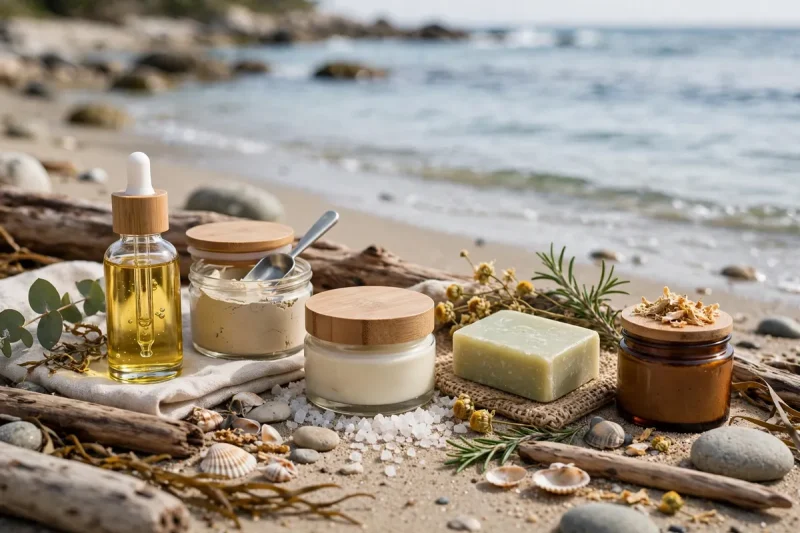

Ocean friendly beauty is skincare and cosmetics made with the ocean in mind: products that avoid ingredients harmful to marine life, use packaging that does not end up in the sea, and are made by brands that take their environmental impact seriously. For shoppers who love the ocean — swimmers, beach walkers, coastal communities, and anyone who cares about marine life — ocean friendly beauty is a practical way to align daily routines with environmental values. In this guide to ocean friendly beauty, we explain what it means, which ingredients and claims to watch, and how to build an ocean-friendly routine without sacrificing results.
Beauty products reach the ocean through several routes. Ingredients washed off skin and hair in the shower flow through drains to waterways and eventually to the sea. Sunscreen worn while swimming washes directly into coastal waters. Packaging — plastic bottles, tubes, and microplastic beads — can escape waste systems and end up in rivers and oceans. And the manufacturing of cosmetics itself consumes water, energy, and raw materials that affect marine ecosystems indirectly. Ocean friendly beauty addresses all of these routes, not just one.
What Makes Beauty Ocean Friendly?
Several things make a beauty product ocean friendly. First, its ingredients: ocean friendly products avoid microplastics, avoid certain chemical UV filters associated with coral damage, and avoid ingredients known to harm aquatic life. They favour biodegradable ingredients that break down safely in water rather than persisting in marine environments. Second, its packaging: ocean friendly brands use recyclable, refillable, or plastic-free packaging, and avoid single-use plastics where possible.
Third, its manufacturing: brands that reduce water use, treat wastewater properly, and source ingredients responsibly — such as sustainably harvested seaweed or responsibly sourced palm oil — lower their ocean impact. Fourth, its honesty: ocean friendly claims should be specific and verifiable, not vague green language. A brand that explains exactly what it avoids, what it uses instead, and how its packaging is handled is more trustworthy than one that simply prints “ocean friendly” on the label.
Our guide to microplastics in cosmetics explains one of the biggest ocean threats from beauty products in detail — where microplastics hide and how to avoid them.
Ingredients to Avoid for Ocean Friendly Beauty
Certain ingredients deserve particular attention from ocean-conscious shoppers. Microplastics — tiny plastic particles used as exfoliants, binders, or fillers — are a direct ocean pollutant: they pass through water treatment, enter rivers and seas, and are eaten by marine life. Check ingredient lists for polyethylene, polypropylene, polystyrene, and acrylates copolymer, among others, and choose products that use natural exfoliants instead.
Some chemical sunscreen filters, notably oxybenzone and octinoxate, have been linked to coral bleaching and are restricted in some coastal regions. Mineral sunscreens using zinc oxide or titanium dioxide are generally considered safer for reefs, though shoppers should still choose non-nano formulations where possible, since even mineral particles can affect marine life at very small sizes. For swimmers and beachgoers, reef-safe sunscreen is one of the simplest ocean friendly choices available.
Other ingredients to watch include certain silicones that persist in water, harsh surfactants that harm aquatic organisms, and palm oil from unsustainable sources that drives deforestation affecting coastal ecosystems. None of these requires perfection — ocean friendly beauty is about better choices, not flawless ones — but avoiding the worst offenders makes a real difference.
Building an Ocean Friendly Beauty Routine
An ocean friendly routine starts with fewer, better products. A short routine — cleanser, moisturiser, sun protection — uses fewer resources and creates less packaging waste than a long multi-step routine. Choose solid formats where they work for you: shampoo bars, solid cleansers, and refillable products reduce plastic significantly. Refill stations and refill pouches, where available, cut packaging further.
Look for credible certifications and clear ingredient lists rather than vague claims. Brands that publish full ingredient lists, explain their packaging, and report on their environmental progress are easier to trust. And remember that the most ocean friendly product is often the one you already own: using products up fully, rather than discarding half-used items for the newest launch, reduces waste more than any single purchase decision.
For wider beauty guidance, see our guides to best beauty products, beauty SEO, beauty writing, the UK beauty industry, and luxury beauty.
Ocean Friendly Beauty and the Bigger Picture
Individual choices matter, but ocean friendly beauty is also part of a bigger shift: regulation on microplastics, industry moves toward refillable packaging, and growing consumer demand for transparency are changing what beauty brands offer. Shoppers who ask questions, choose better products, and support brands that act responsibly help accelerate that shift — and the ocean benefits from every better choice, however small it seems.
For the automotive side of cleaner air and water, see our companion guide to MOT and air quality standards, which explains how vehicle emissions testing protects the air we breathe.
Final Thoughts
Ocean friendly beauty is not about giving up good skincare: it is about choosing products that care for your skin without harming the ocean — avoiding microplastics and harmful UV filters, favouring biodegradable ingredients and refillable packaging, and supporting brands that are honest about their impact. Start with sunscreen and exfoliants, shorten your routine, use products fully, and ask brands the hard questions. The ocean, and your skin, will both thank you.
Every small change adds up: one refillable bottle, one reef-safe sunscreen, one product finished instead of thrown away. Multiplied across millions of routines, those choices shape what brands make and what ends up in the sea. Ocean friendly beauty is simply good skincare with a wider view — and it is a view worth keeping.
