
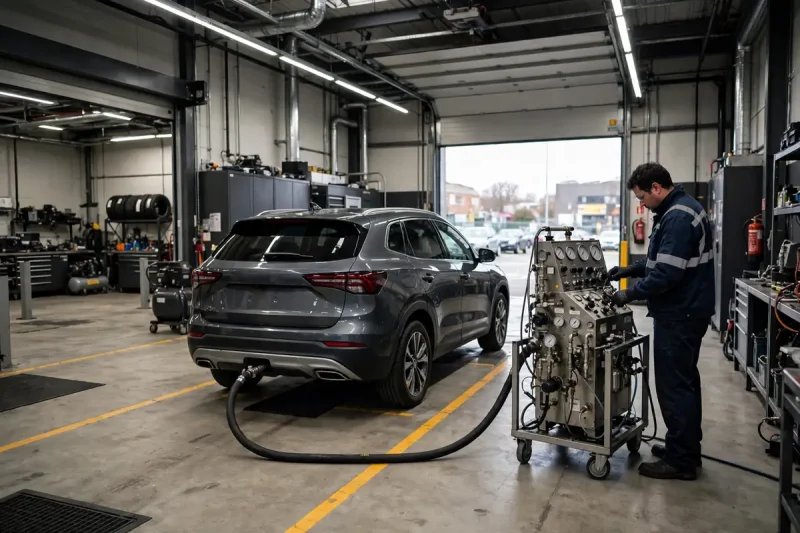

MOT and air quality standards are closely linked: the annual MOT test is one of the main ways the UK checks that vehicles on the road are not polluting more than they should. Emissions testing within the MOT catches cars with faulty exhausts, failing catalytic converters, and engine problems that increase harmful pollutants — and it keeps those cars off the road until they are fixed. In this guide to MOT and air quality standards, we explain how emissions testing works, what the limits are, what causes failures, and how drivers can prepare.
Air quality matters for health: vehicle exhaust pollutants — nitrogen oxides, particulate matter, carbon monoxide, and hydrocarbons — contribute to respiratory problems, especially in towns and cities where traffic is heaviest. While electric vehicles and cleaner engines are reducing overall emissions, millions of petrol and diesel cars remain on UK roads, and their condition determines how much they actually pollute. A well-maintained car pollutes far less than a neglected one, even when both are the same model and age.
How MOT Emissions Testing Works
MOT emissions testing measures what comes out of a vehicle’s exhaust and compares it with legal limits for its age, fuel type, and engine. Petrol cars are tested for carbon monoxide and hydrocarbons at idle and at fast idle. Diesel cars are tested for smoke opacity — how much visible particulate matter the exhaust produces — and newer diesels face stricter limits than older ones. Cars with diesel particulate filters (DPFs) are checked to ensure the filter has not been removed or tampered with, since a missing DPF dramatically increases particulate emissions.
The test also includes a visual inspection of the exhaust system: leaks, damage, and missing components can all cause failures or advisories. A car that fails on emissions cannot pass its MOT until the fault is fixed and the car is retested — which is exactly the point: the test exists to keep polluting vehicles off the road.
What Causes MOT Emissions Failures?
Common causes of emissions failures include worn spark plugs, faulty oxygen sensors, failing catalytic converters, clogged air filters, and engine problems such as oil burning or poor combustion. Short journeys also contribute: cars that rarely reach full operating temperature build up deposits and may fail emissions tests that a well-driven car would pass. Diesel cars with blocked DPFs — often caused by repeated short trips that prevent regeneration — are a frequent failure cause.
Regular servicing prevents most emissions failures. Fresh oil, clean filters, healthy spark plugs, and a properly functioning exhaust system keep emissions within limits. Our guides to vehicle inspection for sustainable car checks, eco-friendly tyre services, and wheel alignment for efficiency cover the maintenance that keeps cars cleaner and more efficient.
Air Quality Standards Beyond the MOT
The MOT is not the only air quality control on UK vehicles. Clean Air Zones and the London Ultra Low Emission Zone (ULEZ) restrict or charge the most polluting vehicles in certain areas, using emissions standards (Euro standards) to decide which cars qualify. New cars must meet Euro 6 or later standards, which set strict limits on nitrogen oxides and particulates. Older, more polluting cars face charges or restrictions in these zones, giving owners a financial reason to upgrade or to maintain their cars better.
Government policy continues to tighten: the phase-out of new petrol and diesel car sales, investment in electric charging, and support for cleaner transport all aim to improve air quality over time. But for the millions of existing cars, the MOT remains the most direct, practical control — and its emissions test is the moment when a car’s real-world pollution is actually measured.
How Drivers Can Prepare for the Emissions Test
Preparation for the emissions test is mostly good maintenance. Service the car on schedule, replace filters and spark plugs when due, and fix warning lights rather than ignoring them. Before the test, take the car for a longer drive at operating temperature — this helps clear deposits and allows the DPF to regenerate on diesels. Use good-quality fuel, and consider an engine treatment only if recommended by a trusted garage, not as a substitute for repairs.
If a car fails on emissions, the fix depends on the cause: a sensor, a catalytic converter, an exhaust repair, or an engine service. A good garage will diagnose the specific fault rather than guessing, and will explain the repair before carrying it out. Avoid “quick fixes” that mask emissions without repairing the fault — they may pass one test but fail the next, and they leave the car polluting in the meantime.
Related guides on this site: AutoTrader UK for sustainable car buying, car finance for sustainable ownership, and repair finance for UK drivers.
Final Thoughts
MOT and air quality standards work together to keep Britain’s air cleaner: the MOT measures what each car actually emits, and air quality zones and emissions standards push the fleet toward cleaner vehicles over time. For drivers, the message is simple — maintain the car, service it on schedule, fix faults promptly, and prepare properly for the test. A car that passes its emissions test cleanly is not just legally compliant; it is a car that pollutes less, runs better, and costs less to keep on the road.
For the beauty side of protecting water and air, see our companion guide to ocean friendly beauty, which explains how skincare choices affect marine life.
