
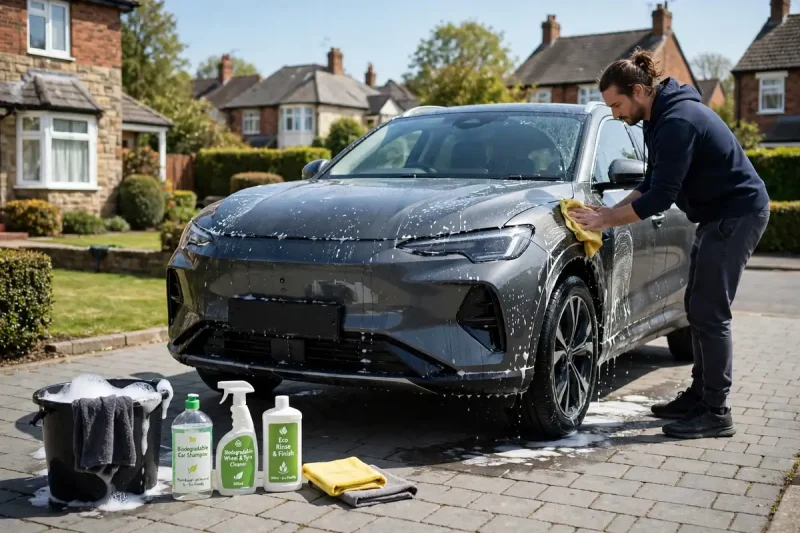

Keeping a car clean and well maintained no longer has to mean harsh chemicals, litres of wasted water and a driveway full of foam running into the drain. Eco-friendly car care has become a realistic option for UK drivers as auto care services and home car-care products have adapted: biodegradable cleaning products, waterless car washing and non-toxic cleaners now do the same jobs as traditional products, with far less impact on the environment around your home.
This guide explains what greener car care involves, which methods work best for everyday drivers, and how professional services are changing their practices too. None of it requires specialist equipment or giving up a properly clean car — it is mostly about choosing better products and using them in smarter ways.
Why Conventional Car Care Causes Problems
Traditional car shampoos, wheel cleaners and degreasers often contain detergents and solvents that wash straight off the driveway and into surface-water drains. From there they can reach streams and rivers untreated. Hosepipe washing also uses a surprising amount of water for a single car, and gritty sponges dragged across paintwork cause swirl marks that later need machine polishing to remove — another round of products and energy.
None of this means you should stop washing your car. Dirt, road salt and bird droppings damage paint and trim if they are left in place, and regular cleaning is part of looking after the vehicle. The goal of eco-friendly car care is simply to clean effectively while sending less pollution down the drain and using fewer resources in the process.
Greener Ways to Wash Your Car at Home
Use biodegradable cleaning products. Look for car shampoos and all-purpose cleaners labelled biodegradable and phosphate-free. Used with a bucket rather than a running hose, they cut both chemical load and water use dramatically. A grit guard in the bucket and two-bucket washing also protect your paintwork.
Try waterless car washing. Waterless wash sprays lift dirt into a solution that is wiped away with microfibre cloths. They suit cars with light to moderate dirt and are ideal for drivers without outdoor taps or those in flats. Heavily soiled cars still need a rinse first, so grit is not dragged across the paint.
Choose non-toxic cleaners for wheels and interiors. Modern pH-neutral wheel cleaners clean effectively without the harsh acids of older products, and plant-based interior cleaners handle dashboards and upholstery without strong chemical smells inside the cabin.
Wash on grass or gravel where possible. If you do rinse with water, washing on a permeable surface lets water soak into the ground and filter naturally, instead of carrying shampoo straight into the storm drain.
How Auto Care Services Are Going Green
Professional valeters and detailers — often described as eco detailing specialists — have adopted many of the same methods at larger scale. Steam cleaning uses a fraction of the water of a pressure washer and no chemicals at all for many jobs. Professional auto care services also reclaim and filter their wash water, dispose of waste fluids responsibly, and increasingly use concentrated products that reduce plastic packaging.
The same thinking runs through wider vehicle care. A thorough vehicle inspection catches leaks of oil, coolant and brake fluid early, preventing contamination as well as breakdowns. Specialist EV servicing and hybrid servicing keep electric and hybrid cars efficient, while correct wheel alignment reduces tyre wear — fewer replacement tyres means less waste and better fuel economy from the tyres you already have.
Maintenance Habits That Help the Environment
Cleaning is only part of the picture. Keeping tyres at the correct pressure, clearing unnecessary weight from the boot and fixing small issues promptly all reduce fuel use and extend the life of parts. Emissions are checked as part of the MOT, and our explainer on MOT and air quality standards shows how that testing protects the air in towns and cities. When you buy your next car, choosing a well-maintained used model is itself a sustainable decision — guides to buying through services like AutoTrader UK can help you find one with a solid history.
Water Use: Buckets, Pressure Washers and Steam
How you apply water matters as much as the products you choose. A running hosepipe is the thirstiest option, delivering a continuous flow whether you are rinsing or not. A pressure washer, used carefully and in short bursts, actually uses less water than a hose for the same job because it works faster and at higher pressure — although it should be kept away from delicate trim and used with a lance setting suitable for paintwork. Two buckets and a wash mitt remain the gentlest low-water method for most home users, and steam cleaners go further still, using very little water and no detergent for interior plastics, vents and door shuts.
Timing helps too. Washing early or late in the day, out of direct sun, stops products drying onto the paint before you rinse them off, which means less product wasted and no need for a second pass. It is a small habit, but across a year of regular washes it adds up to a real saving in both water and cleaning products.
Building a Simple Eco Car-Care Kit
You do not need a shelf of specialist products. A practical greener kit is short: a biodegradable car shampoo, a waterless wash spray for in-between cleans, a pH-neutral wheel cleaner, two buckets with grit guards, a handful of microfibre cloths and a plant-based interior cleaner. Wash in the shade so products do not dry on the paint, work from the roof down, and dry with a clean microfibre towel to prevent water spots.
Eco-friendly car care is not about perfection — it is about better defaults. Swap the products you already use for biodegradable, non-toxic alternatives, use water more carefully, and keep on top of the maintenance that stops leaks and waste before they start. Your car stays just as clean, and the driveway, drains and local waterways stay cleaner too.
One last habit ties everything together: keep a simple log of what you clean, check and replace, and when. Sustainable maintenance is mostly about rhythm rather than effort — small, regular attention that stops waste, leaks and premature wear before they turn into bigger, costlier problems.
