
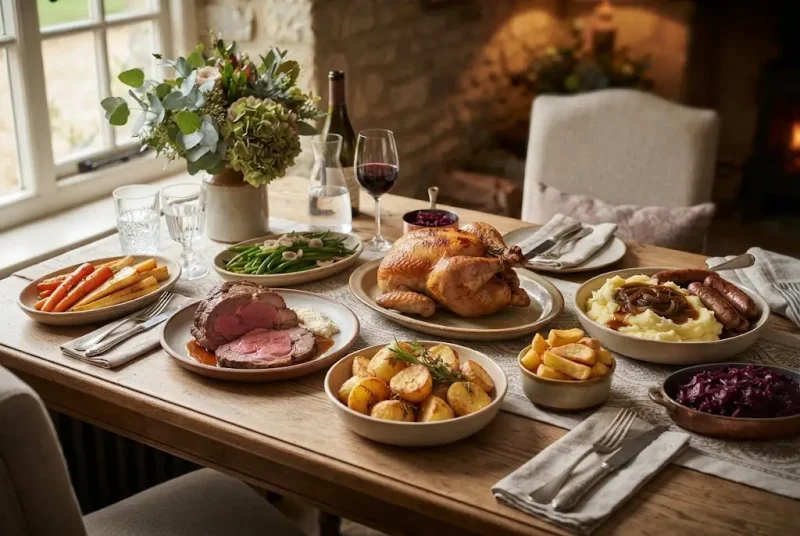

Meat and Poultry remain important ingredients in many traditional British meals, from Sunday roasts and chicken dinners to bangers and mash, pies and hearty casseroles. Beef, pork, lamb, chicken and turkey all provide protein and a range of vitamins and minerals, although the nutritional value of a meal depends heavily on the cut, portion size, cooking method and accompanying foods.
For people interested in British food, understanding the difference between everyday meat dishes and more occasional processed options can make meal planning easier. The same applies when comparing a traditional chicken feast with foods such as sausages, chips with skin or a classic sausage and mash dinner. The goal is not to remove familiar foods from the table, but to understand how they fit into a varied diet.
What Counts as Meat and Poultry?
Meat generally refers to the flesh of mammals and includes familiar choices such as beef, pork, lamb, mutton and venison. Poultry refers to domesticated birds commonly eaten as food, including chicken, turkey, duck and goose.
Both groups can provide useful nutrients. Meat can supply protein, iron, zinc and B vitamins, while poultry is also a useful source of protein. The NHS notes that meat is one of the main dietary sources of vitamin B12.
However, different products have very different nutritional profiles. A skinless grilled chicken breast is not nutritionally equivalent to a highly processed sausage, just as a lean beef steak is different from a fatty meat pie.
Popular British Meat and Poultry Favourites
British cuisine includes a broad range of meat-based dishes. Some have become everyday family favourites, while others are strongly associated with traditional Sunday lunches, pub food or regional cooking.
- Roast beef: A classic Sunday roast often served with potatoes, vegetables, gravy and Yorkshire pudding.
- Roast chicken: A versatile family meal that can be served with roast potatoes, vegetables and gravy.
- Bangers and mash: Sausages served with mashed potatoes and traditionally accompanied by onion gravy.
- Shepherd’s pie: Traditionally made with lamb and topped with mashed potato.
- Cottage pie: A similar dish traditionally prepared with minced beef rather than lamb.
- Chicken pie: A pastry-based dish combining chicken with vegetables and a savoury filling.
- Roast lamb: A familiar British roast often paired with potatoes, seasonal vegetables and mint sauce.
These dishes can also work particularly well when adapted for group dining. Large roast dishes, chicken portions and sides can be placed at the centre of the table, building naturally on these meal sharing ideas.
Chicken Feast Ideas for Family Meals
A chicken feast can be one of the most flexible ways to feed a family or group. Chicken can be roasted whole, served as portions, grilled, baked or incorporated into dishes such as curries, pies and casseroles.
For a balanced shared meal, combine chicken with vegetables and a suitable starchy side such as potatoes, rice or bread. Salads and vegetables can add colour, fibre and variety, while sauces can be served separately so people can control how much they use.
Chicken also works well for larger gatherings because different portions can be prepared in advance and served alongside several side dishes. For ideas on arranging food for groups, see our guide to party food trays and sharing platters.
Meat and Poultry Nutrition: What Should You Know?
Protein is one of the main nutritional reasons meat and poultry feature in many diets. Protein contributes to the growth and repair of body tissues, while meat can also provide nutrients including iron, zinc and vitamin B12.
However, nutrition varies significantly between products. Lean cuts generally contain less fat than visibly fatty cuts, while processed products such as sausages, bacon and some burgers can contain substantial amounts of salt and saturated fat.
The NHS recommends choosing lean cuts and skinless poultry where possible and eating less red and processed meat. It also advises limiting red meat to no more than three portions a week, with a total of around 350–500g of cooked meat for those portions.
That means portion size matters as much as the food itself. A smaller serving of meat combined with vegetables, pulses or other protein sources can create a varied meal without making meat the only component on the plate.
Bangers and Mash Calories: What Changes the Total?
People searching for bangers and mash calories should remember that there is no single calorie figure for every version of the dish. The total depends on the sausages, amount of mashed potato, cooking fat, gravy and portion size.
For example, an NHS Healthier Families recipe for sausage and mash provides approximately 320 kcal per serving. That particular recipe uses reduced-fat sausages and a vegetable-boosted mash containing carrots, swede and potatoes, so it should not be treated as a calorie figure for every traditional version of the meal.
This is an important distinction when considering sausage and mash calories. A meal made with larger, higher-fat sausages, butter-rich mash and a generous serving of gravy may contain considerably more energy than a lighter recipe.
How to Make Sausage and Mash More Balanced
There are several straightforward ways to adjust the meal without losing its traditional character. Choose sausages with a lower fat content, prepare mash with less added fat, and include vegetables such as carrots, cabbage, peas, broccoli or swede.
The NHS recipe also demonstrates how adding vegetables to mashed potato can increase the variety of ingredients in the dish while keeping the familiar bangers-and-mash format.
Chips with Skin vs Skin on Fries
The phrases chips with skin and skin on fries generally describe potatoes that retain some or all of their skin during preparation. Leaving the skin on can give chips a rustic appearance and slightly different texture, but the nutritional profile still depends heavily on how the potatoes are cooked.
Deep-frying can add considerable fat, whereas oven-baking or air-frying with a modest amount of oil can produce a different nutritional profile. The NHS recommends cooking chips in the oven with a small amount of vegetable oil and keeping the skins on rather than deep-frying them when looking to reduce fat.
The skin itself is not a reason to assume that a serving is automatically healthier. Portion size, cooking oil and the rest of the meal remain important.
Meat of Poultry: Is Skin Important?
When discussing the meat of poultry, chicken and turkey are often highlighted as relatively versatile protein choices. However, the nutritional profile can change depending on whether the skin is eaten.
Poultry skin contains more fat than the lean meat underneath it. The NHS recommends choosing chicken and turkey without the skin where possible to reduce fat intake.
This does not mean that poultry skin must never be eaten. Rather, it is useful to recognise that removing the skin is one simple way of reducing the fat content of a poultry meal.
Processed Meat and Traditional British Foods
Some of Britain’s best-known meat dishes use processed meat. Sausages, bacon, ham and other preserved meat products are common examples. Processing can involve smoking, curing, salting or adding preservatives.
The NHS advises eating less red and processed meat because consuming too much can increase health risks. It also notes that processed meat can be relatively high in salt.
This does not mean every traditional British dish needs to disappear from a varied diet. Instead, frequency, portion size and the wider meal can all be considered. A sausage-based meal can sit alongside meals built around poultry, fish, beans, pulses or other protein sources.
How Cooking Method Affects Meat and Poultry
Cooking method can have a meaningful effect on the overall meal. Grilling, baking, steaming, poaching and roasting with limited added fat can be useful alternatives to deep-frying.
Trimming visible fat before cooking can also reduce the amount of fat in the finished dish. With poultry, removing the skin can further reduce fat intake.
For meat-based dishes such as casseroles, curries and stews, adding vegetables and pulses can increase variety while allowing a smaller amount of meat to provide flavour and protein throughout the dish.
Food Safety When Preparing Meat and Poultry
Safe handling is particularly important with raw poultry and certain meat products. Raw meat should be kept separate from ready-to-eat foods, stored appropriately in the refrigerator and cooked according to safe preparation guidance.
The NHS advises that poultry, pork, sausages, burgers, kebabs and several other meat products should be cooked thoroughly. It also advises against washing raw meat because splashing water can spread bacteria around the kitchen.
Using separate utensils and chopping boards for raw meat and ready-to-eat foods can also help reduce the risk of cross-contamination.
Choosing Meat and Poultry at the Supermarket
Nutrition labels can make it easier to compare similar products. Look at energy, total fat, saturated fat and salt rather than relying only on product descriptions such as “premium” or “traditional”.
For fresh meat, choosing leaner cuts can reduce fat intake. For poultry, skinless chicken or turkey can be a practical option. With processed foods, comparing labels can reveal substantial differences between brands and products.
The NHS explains that front-of-pack traffic-light labels can help shoppers identify whether foods contain high, medium or low amounts of fat, saturated fat, sugars and salt.
Building a Balanced British Meat Meal
A traditional meat dish does not need to dominate the entire plate. A useful approach is to combine a sensible portion of meat or poultry with vegetables and a suitable starchy food.
For example, roast chicken can be served with potatoes and several vegetables. Bangers and mash can be accompanied by peas, cabbage or other vegetables. A beef casserole can contain beans and a generous selection of vegetables alongside the meat.
This approach keeps familiar British flavours while creating greater variety across the meal. It also fits naturally with the wider principles of a balanced diet, which emphasise a variety of foods rather than relying on one food group alone.
Final Thoughts on Meat and Poultry
Meat and Poultry have a long-standing place in British cooking, from roast chicken and beef to bangers and mash and comforting pies. They can provide valuable protein, iron, zinc and B vitamins, but nutritional differences between cuts and products are important.
Paying attention to portion size, choosing leaner options, varying protein sources and including plenty of vegetables can make traditional meals more balanced. Whether you are preparing a simple family dinner or building a larger shared spread, understanding the ingredients behind familiar dishes makes it easier to make informed food choices.
For more ideas on creating generous group meals, explore our guide to Meal Sharing Ideas and discover practical ways to combine meat, poultry, sides and other foods on a shared table.
