
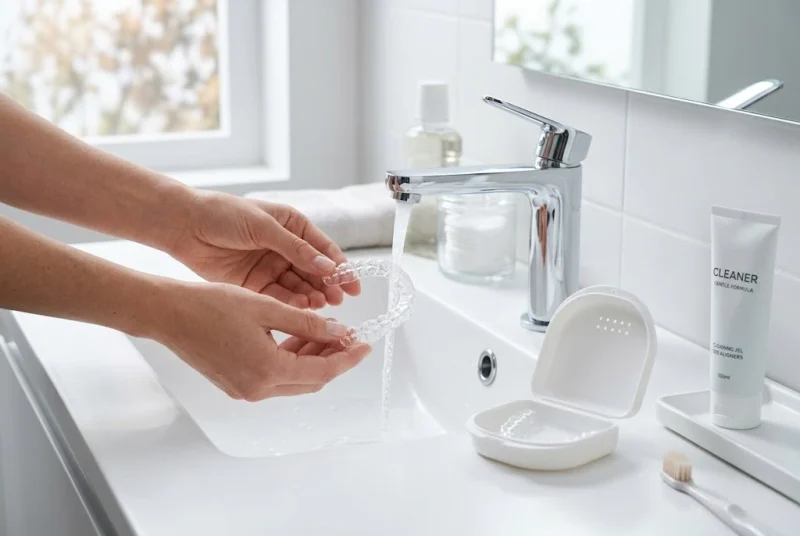

Clear aligners are designed to fit closely over the teeth for much of the day, making regular cleaning and proper care an important part of orthodontic treatment. Although the trays are removable and relatively easy to handle, they still need a consistent cleaning routine to keep them fresh, clear and comfortable to wear.
Good aligner hygiene also goes hand in hand with good oral hygiene. Food particles, plaque and bacteria can become trapped between the teeth and the aligner if the trays are put back into the mouth without adequate cleaning. Learning how to clean clear aligners correctly can therefore help patients maintain both their trays and their teeth throughout treatment.
Why Is Clear Aligner Cleaning Important?
Clear aligners remain in close contact with the teeth for a large part of the day. If the trays are not cleaned regularly, bacteria and residue can accumulate on their surfaces. Over time, this may contribute to unpleasant odours and make the aligners look cloudy rather than transparent.
Cleaning the trays is also important because anything left on the aligners can remain close to the teeth when they are worn again. This is particularly relevant after meals, when food particles and sugary or acidic residues may still be present in the mouth.
For a broader overview of how clear aligner treatment works and who may be suitable for it, see our guide to clear aligners and how they work.
How Often Should You Clean Clear Aligners?
Clear aligners should be cleaned regularly rather than only when they become visibly dirty. A simple routine can help prevent the accumulation of plaque and residue while keeping the trays more pleasant to wear.
It is particularly useful to rinse the aligners whenever they are removed and before putting them back in. A more thorough cleaning should also form part of the daily routine, following the instructions supplied by the orthodontist, dentist or aligner manufacturer.
Patients should also maintain their normal oral hygiene routine. Cleaning the aligners does not replace brushing the teeth or cleaning between them.
How to Clean Clear Aligners Step by Step
The exact cleaning method can vary depending on the aligner system, so patients should always follow the specific instructions provided with their trays. However, a basic cleaning routine can include the following steps:
- Remove the aligners carefully. Take the trays out according to the instructions provided by your dental professional.
- Rinse them with cool or lukewarm water. This helps remove saliva and loose residue from the surface.
- Clean the trays using the recommended method. Follow the manufacturer’s or dental professional’s guidance for suitable cleaning products and techniques.
- Rinse thoroughly. Make sure any cleaning residue is removed before putting the aligners back into your mouth.
- Clean your teeth. Whenever possible, brush your teeth and clean between them before replacing the aligners.
A consistent routine is generally more useful than trying to correct heavy build-up after it has already developed.
Can You Use Toothpaste to Clean Clear Aligners?
Patients should be cautious about using ordinary toothpaste on clear aligners. Some toothpastes contain abrasive ingredients that can scratch the surface of the trays. Small scratches may make the aligners appear cloudy and can make their transparent appearance less noticeable.
Rather than choosing a cleaning product at random, it is better to follow the recommendations for the specific aligner system being used. Your orthodontist or dentist can also explain which cleaning methods are appropriate for your trays.
Why Should You Avoid Hot Water?
Very hot water should generally be avoided when cleaning clear aligners. The trays are made from thermoplastic material, and excessive heat can affect their shape.
An aligner that has become distorted may no longer fit the teeth as intended. Since each tray is designed to apply specific pressure to particular areas of the teeth, a change in its shape can affect the way it sits in the mouth.
For this reason, cool or lukewarm water is a safer choice unless the manufacturer specifically provides different instructions.
How Should You Store Clear Aligners?
When clear aligners are removed, they should be placed somewhere clean and protected. A dedicated aligner case is usually much safer than leaving the trays loose on a table, in a pocket or wrapped in a tissue.
Putting an aligner in a tissue can be particularly risky because it may accidentally be thrown away with other rubbish. A protective case also reduces the risk of the tray becoming scratched, contaminated or damaged.
The storage case itself should also be kept clean. If the case becomes dirty, putting freshly cleaned aligners inside it can undermine the cleaning routine.
What Should You Avoid When Cleaning Clear Aligners?
Some everyday cleaning habits may seem harmless but can damage transparent aligners. Patients should avoid methods that are not recommended for their specific aligner system.
Common things to be cautious about include:
- very hot or boiling water;
- strongly abrasive cleaning products;
- unapproved household chemicals;
- rough scrubbing that can scratch the trays;
- leaving the aligners exposed when they are not being worn;
- using damaged or visibly deformed trays without professional advice.
If you are unsure whether a particular cleaning method is safe, ask your dentist or orthodontist before using it.
Should You Clean Your Teeth Before Wearing the Aligners Again?
Whenever practical, cleaning the teeth before putting the aligners back in is a useful habit. Food debris and plaque left on the teeth can become trapped underneath the trays when they are replaced.
This is one reason oral hygiene is an important part of clear aligner treatment rather than something that should be considered separately from it. Brushing regularly and cleaning between the teeth can help maintain a healthier oral environment while the aligners are being worn.
Patients should also pay attention to the advice provided by their dental professional because individual circumstances can vary.
What About Eating and Drinking With Clear Aligners?
Clear aligners are normally removed before eating. Food can damage or stain the trays, while particles left between the aligner and teeth can create an unfavourable environment for oral health.
Plain water is generally the simplest option while the aligners are in place. Other drinks may contain colourings, sugar or acids that can affect the trays or contribute to dental problems when consumed frequently.
For a more detailed discussion of food and drink choices during treatment, our upcoming guide on what you can eat and drink with clear aligners will cover this topic separately.
It is also useful to understand the wider daily rules associated with aligner treatment. You can read what you can and cannot do during aligner treatment for additional guidance on wearing, eating, cleaning and caring for aligners.
What If a Clear Aligner Becomes Cloudy?
A cloudy appearance can develop when residue, plaque or scratches accumulate on the surface of an aligner. In some cases, improving the cleaning routine may help remove surface build-up.
However, not every change in appearance can be solved by cleaning. Scratches, deformation or other physical damage may permanently affect the tray. If an aligner looks significantly different, no longer fits properly or has been damaged, it is sensible to contact the dental professional responsible for the treatment.
What If You Lose or Damage an Aligner?
Clear aligners are removable, which makes them convenient, but it also means they can be misplaced or accidentally damaged. If a tray is lost or becomes unusable, patients should not simply make their own decision about which tray to wear next.
The correct response depends on the treatment stage and the individual treatment plan. Contacting the dentist or orthodontist allows them to advise whether the previous tray, the next tray or a replacement aligner should be used.
Keeping the aligners in their dedicated case whenever they are not being worn can reduce the risk of accidental loss or damage.
How Can You Keep Clear Aligners Fresh?
A few simple habits can make daily aligner care easier. Rinsing the trays after removal, cleaning them regularly, storing them in a clean case and maintaining good oral hygiene can all help keep the aligners in better condition.
It is also useful to establish a routine around meals. After eating, patients can clean their teeth when possible and rinse the aligners before putting them back in. This reduces the amount of food residue that can remain between the trays and teeth.
Most importantly, patients should follow the cleaning instructions supplied for their particular aligner system rather than relying on generic advice alone.
Clear Aligner Care Is Part of the Treatment
Clear aligners are designed to guide teeth through a planned sequence of gradual movements, but looking after the trays is an important part of using them correctly. Clean aligners can be more comfortable to wear and are less likely to develop unpleasant odours or a cloudy appearance caused by accumulated residue.
At the same time, cleaning the trays should always be combined with proper brushing, interdental cleaning and regular dental care. The goal is not simply to keep the aligners looking clear but to maintain good oral health throughout the treatment period.
By following the recommended cleaning routine, avoiding excessive heat and unsuitable abrasive products, storing the trays safely and seeking professional advice when something does not seem right, patients can take better care of their aligners throughout treatment.
For a complete overview of daily aligner habits, you can also refer to our related guide on what may and may not be done during aligner treatment.
