

Understanding Panama property rights is essential before buying land in the country. Foreign buyers need to know the difference between titled property and Rights of Possession (ROP), because each offers a different level of legal certainty and can affect financing, development, and resale. Whether you are considering a retirement home, a coastal lot, or an investment property, verifying the legal status of the land should come before paying a deposit.
Panama offers a range of property opportunities, but not every parcel advertised for sale comes with registered ownership. A seller may offer a registered property title or transfer possessory rights supported by different documents. Understanding what these arrangements mean can help buyers avoid expensive misunderstandings.
Can Foreigners Buy Property in Panama?
Foreign nationals can generally purchase titled property in Panama without becoming citizens or obtaining residency first. However, some locations and land classifications are subject to specific legal restrictions.
Article 291 of Panama’s Constitution restricts foreign individuals and companies with foreign capital from acquiring national or private land within ten kilometres of an international border. Indigenous territories, protected areas, and certain coastal or island properties may also have special rules that affect ownership, use, or eligibility for titling.
Buyers should therefore assess the specific property rather than assume that every advertised parcel is available for unrestricted foreign ownership. A qualified Panamanian lawyer can check the location, classification, ownership records, and applicable restrictions before a transaction proceeds.
The Constitution of Panama is an official starting point for understanding the country’s constitutional rules on land ownership.
Panama Property Rights: What Is Titled Land?
Titled land is property with registered ownership recorded in Panama’s Public Registry. Its registry information can help establish the registered owner and identify relevant mortgages, liens, easements, and other recorded restrictions.
For foreign buyers, registered title generally provides a clearer basis for establishing ownership and transferring the property. It may also make financing and resale more straightforward, although individual lenders and transactions have their own requirements.
Before purchasing titled property, buyers should confirm that the seller is the registered owner or has proper legal authority to sell. A lawyer should review the current registry record and the relevant transaction documents rather than relying solely on a photocopy supplied by the seller.
A registered title does not automatically mean that every aspect of the property is problem-free. Buyers must still investigate boundaries, access, outstanding obligations, zoning, environmental restrictions, and any permissions needed for their intended use.
What Are Rights of Possession (ROP) in Panama?
Rights of Possession, commonly called ROP and known in Spanish as derechos posesorios, refer to rights associated with possessing or occupying land without registered ownership equivalent to a titled property.
These arrangements may be encountered in rural, coastal, and island areas. Depending on the circumstances, possessory rights may be transferable. However, transferring those rights does not automatically give the purchaser a registered title to the land.
This distinction is important because documentation supporting a possession claim is not necessarily equivalent to registered ownership. Buyers need to investigate the history of possession, supporting evidence, boundaries, possible competing claims, and the rules applicable to the parcel.
In some circumstances, a process to obtain title may be available through the relevant authorities. Panama’s National Land Administration Authority, known as ANATI, administers land-titling and regularisation procedures. Eligibility depends on the property’s legal status and the applicable requirements; approval should never be assumed.
For this reason, buyers should not rely on a seller’s verbal promise that ROP land can easily be converted into titled property. An independent lawyer should establish whether the rights can be transferred and whether a realistic legal route to registered title exists.
Risks of Buying Untitled Land in Panama
Buying land under ROP is not automatically fraudulent or unsuitable for every buyer. The risk arises when the buyer misunderstands the rights being transferred or fails to investigate the property’s circumstances.
Competing possession claims: Another person may dispute the seller’s possession or claim rights over part of the parcel. Resolving such disagreements can require legal or administrative proceedings.
Unclear boundaries: Informal fences, markers, and seller-provided maps may not accurately reflect the property’s boundaries. A professional survey can help identify discrepancies before purchase.
Access difficulties: A parcel may appear accessible but lack a legally established right of way. Buyers should establish whether access is public, private, or dependent on another landholder’s permission.
Development restrictions: Possession does not guarantee permission to build a home or develop a tourism or commercial project. Zoning, environmental protections, coastal restrictions, and other rules may limit what can be done.
Financing and resale challenges: Some lenders may decline to finance property held under ROP. Future buyers may also be reluctant to accept uncertainty about ownership or title, potentially narrowing the resale market.
Uncertain titling prospects: A future title should not be treated as guaranteed because a seller says an application is underway. The relevant authority must determine whether the parcel qualifies under the applicable procedure.
Understanding these risks helps buyers assess whether a property fits their plans, budget, and tolerance for uncertainty.
Due Diligence Checklist for Panama Property Rights
A structured due-diligence process can help foreign buyers identify problems before signing a binding agreement or transferring substantial funds.
1. Search the Public Registry
For titled property, ask an independent lawyer to obtain and review current registry information. Confirm the registered owner’s identity and investigate mortgages, liens, easements, restrictions, and other relevant entries.
The lawyer should also review the ownership history and establish whether the seller can legally complete the transfer. For ROP property, clarify that the transaction concerns possessory rights rather than registered ownership.
2. Verify the Survey and Boundaries
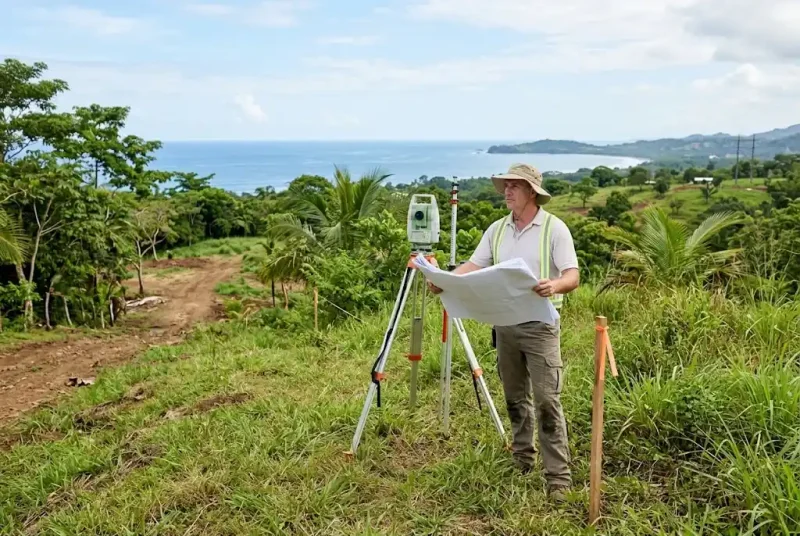
Request the available cadastral plans and arrange for a qualified surveyor to inspect the land. Compare the physical boundaries with the supporting documents and investigate differences in area, location, or adjoining parcels.
This step is especially important for rural and coastal properties, where informal boundary markers may not accurately represent the land being offered.
3. Check Liabilities, Access, and Permitted Uses
Ask your lawyer to investigate relevant property taxes, registered obligations, and applicable condominium or municipal charges. Determine whether outstanding balances must be settled before closing.
Check access routes, water availability, electricity, wastewater arrangements, zoning, environmental restrictions, and building permissions. Requirements vary according to the property’s location and intended use, so the checks should be tailored to the specific parcel.
4. Examine ROP Documentation
If the seller offers Rights of Possession, request the original supporting documents and have an independent lawyer assess them. Investigate the history of possession, previous transfers, boundaries, and evidence of possible disputes.
Ask whether the rights can legally be transferred and whether the parcel is eligible for a titling process. The official Panama Digital procedure for recognising possession rights and adjudicating eligible rural land explains that eligibility depends on specific conditions and that certain types of land are excluded from that procedure.
5. Hire Your Own Lawyer
Choose a qualified Panamanian property lawyer who represents your interests independently. Do not rely exclusively on the seller’s lawyer or on verbal assurances from a person involved in the transaction.
Your lawyer should review the documents, explain the legal status of the land, identify unresolved risks, and advise on suitable contractual protections. For a broader overview of the purchasing process, consult the Step-by-Step Guide to Buying Real Estate in Panama. This resource can provide additional context, but it should not replace property-specific legal advice.
6. Consider an Independent Buyer’s Agent
A buyer’s agent can help compare locations, arrange inspections, evaluate practical considerations, and identify questions that need further investigation.
Ask who the agent represents, how the agent is paid, and whether any conflicts of interest exist. An agent’s assurances should not replace independent legal checks or a professional survey.
7. Review the Contract Before Paying
Before paying a substantial deposit, make sure the agreement clearly identifies the property or rights being transferred, the price, relevant deadlines, and the consequences if due diligence reveals a serious problem.
Discuss suitable conditions, deposit arrangements, and closing procedures with your lawyer. Avoid relying on verbal promises about road access, development permissions, or future title registration.
Final Thoughts on Buying Property in Panama
Verifying Panama property rights before signing a purchase agreement can help buyers avoid costly disputes and unexpected limitations. Titled property and Rights of Possession represent different legal interests, with potentially significant consequences for ownership security, financing, development, and resale.
Before proceeding, review the relevant records, verify the boundaries and access, investigate restrictions, and obtain independent legal advice. If a seller cannot clearly establish what is being transferred, pause the transaction until the uncertainty has been resolved.
The safest purchase begins with understanding the rights attached to the land—not simply its price, location, or view.
