

Introduction
The modern healthcare landscape is undergoing a transformation, fueled by patient demand for more efficient, personalized, and accessible care. To meet these changing expectations, healthcare organizations are increasingly adopting self-service technology in healthcare to empower patients and streamline day-to-day operations. Tools like the patient check in kiosk bring the convenience and autonomy that patients experience in retail and banking into the clinical environment.
Healthcare consumers now expect seamless digital interactions, not just with their providers but throughout the care journey, from appointment scheduling to check-in and billing. By actively investing in self-service solutions, practices, clinics, and hospitals can enhance patient engagement, minimize operational friction, and make high-quality care more accessible to a broader patient base. This shift isn’t simply a trend but a critical step toward modernizing healthcare and meeting the expectations of today’s digitally savvy population.
Enhancing Patient Satisfaction
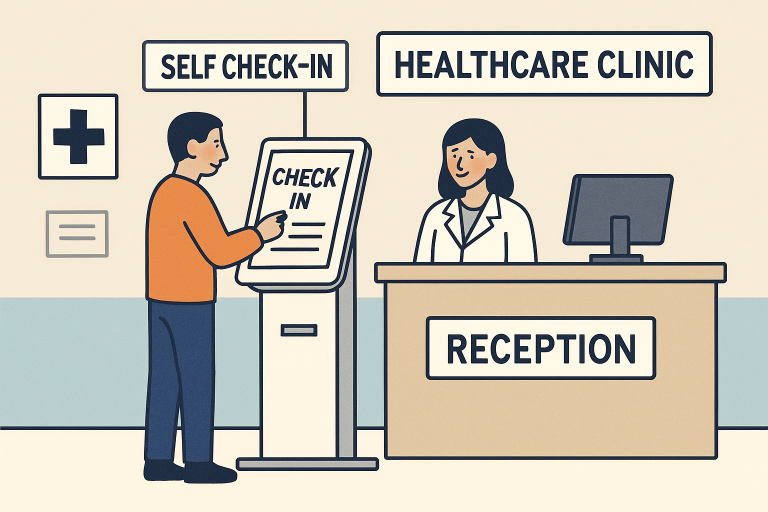
People often associate healthcare visits with long waits, complicated paperwork, and loss of control. Introducing digital self-service options directly addresses these pain points by giving patients more authority over their experience. Tools like online appointment scheduling, pre-visit registration, and electronic check-in enable individuals to interact with healthcare systems on their schedule, minimizing the stress of waiting for front-desk assistance or filling out forms by hand. Implementations of the patient check-in kiosk are increasingly common in clinics and hospitals, allowing for fast, private, and accurate check-in, which also reduces bottlenecks at reception.
Data from recent healthcare IT surveys reveal a striking trend: 93% of patients are interested in utilizing digital solutions for tasks such as booking appointments, completing online intake forms, and handling electronic payments. Empowering patients with these tools fosters higher satisfaction as they feel they have a say in their healthcare journey. Enhanced privacy, faster service, and greater flexibility all contribute to a positive patient experience, ultimately leading to improved perceptions of care quality and increased patient loyalty.
 Streamlining Administrative Processes
Administrative complexity is a major challenge for modern healthcare organizations. Processing patient registrations, managing records, and handling insurance paperwork often diverts attention and resources away from direct patient care, thereby compromising the quality of care. By integrating self-service tools, healthcare facilities can automate many routine administrative functions, benefiting both patients and staff alike.
Administrative Efficiency and Error Reduction
Automating the collection of patient information through digital registration and platforms eliminates many opportunities for manual error, such as incorrect data entry or misfiling of documents. Patients enter their details directly into secure systems, ensuring information is precise and up-to-date. This shift not only reduces the labor involved in recordkeeping but also has far-reaching implications: improved data integrity supports better clinical decision-making, compliance with regulatory mandates, and stronger protection of sensitive patient information. By relieving administrative staff of repetitive paperwork, organizations can allocate more hours and energy towards meaningful patient interactions, driving both efficiency and satisfaction.
Improving Access to Care
Limited office hours, transportation challenges, and high call volumes have long created barriers to timely medical care. Self-service technology plays a crucial role in overcoming these obstacles by providing flexible, digital avenues for patients to connect with providers. Online scheduling portals enable patients to book appointments at their convenience, including after hours, on weekends, or from remote locations, thereby reducing the need to wait on hold or visit in person.
Mobile check-in solutions, combined with automated reminders and notifications, help ensure that patients remember and arrive for their appointments, leading to fewer no-shows and increased utilization of provider time. For those navigating busy lives or living in rural regions, these platforms represent a major step forward in making healthcare more equitable and accessible. Digital innovation, in this context, is not simply about convenience; it’s also about creating a healthcare system that responds more flexibly to the diverse needs of various populations.
Implementing Self-Service Solutions
The successful rollout of self-service technology in healthcare requires deliberate planning and the repetition of best practices to maximize the value of these investments. The process involves more than simply deploying new software or hardware; it demands an understanding of the unique needs of the patient population and a strategic approach to adoption and ongoing improvement. The following steps can help ensure a smooth and effective implementation:
- Assess Patient Needs: No two healthcare settings are identical. Conduct patient surveys, organize focus groups, or launch small-scale pilots to collect feedback on technology preferences, accessibility features, and language options. Listening to your patient base ensures that solutions chosen will genuinely enhance their experience and address their greatest concerns, whether that means supporting multiple languages, ensuring ADA compliance, or maintaining the utmost privacy and security.
- Select the Right Technology: Assess potential platforms for their compatibility with existing electronic health records (EHRs) or practice management systems. Look for vendors with a strong record of support, regular updates, and the ability to scale as needs change. Solutions should prioritize intuitive design, allowing individuals of all ages and technical backgrounds to navigate them easily.
- Provide Training and Support: Even the most advanced technology will fall short without buy-in from those who use it daily. Offer thorough onboarding programs for staff and patients alike, complete with training sessions, clear written or video guides, and accessible help desks. Ongoing education and troubleshooting are critical to smooth adoption and overcoming initial resistance or uncertainty.
- Monitor and Evaluate: Implement a system to track key performance indicators, such as usage rates, patient feedback, reduction in administrative errors, and overall satisfaction scores. Use these insights to inform iterative improvements, updating forms, adding features, or expanding rollout to new departments as needed. Continuous evaluation ensures solutions remain aligned with evolving patient expectations and advances in health technology.
Conclusion
Self-service technology is fundamentally altering how care is delivered, experienced, and managed. By providing patients with convenient ways to participate in their own care and freeing staff from unnecessary administrative tasks, providers can enhance both patient satisfaction and operational efficiency. Thoughtful deployment, attentive monitoring, and continuous refinement position organizations to fully realize the benefits of digital innovation. The future of healthcare relies on these flexible, patient-centered tools to deliver the kind of modern, responsive service that today’s populations expect and deserve.
