
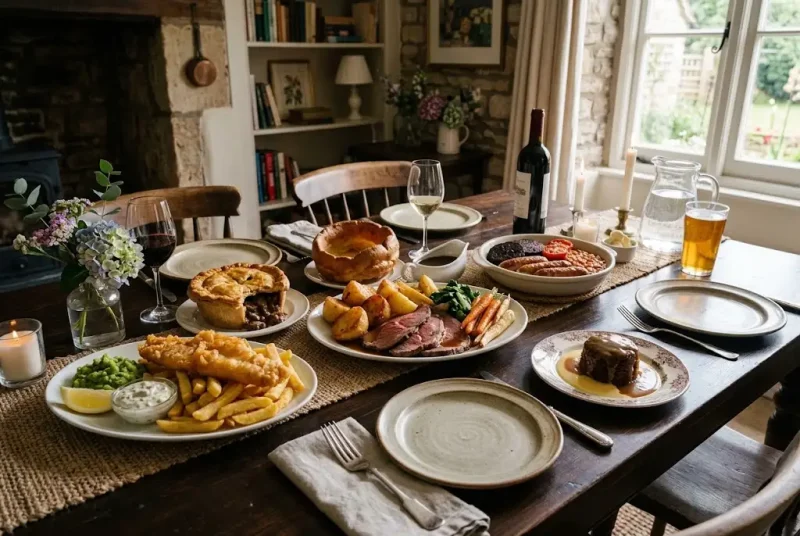

UK Foods offer a varied mix of traditional recipes, regional specialities and everyday dishes that have shaped British food culture for generations. From fish and chips and Sunday roasts to full English breakfasts, pies, curries and comforting puddings, British cuisine includes far more than a single style of cooking.
For visitors discovering British cuisine, or residents looking for ideas for traditional meals, understanding the country’s most popular dishes is a useful starting point. This guide explores classic UK foods, regional favourites, traditional recipes and some of the dishes that continue to appear on British tables today.
What Are UK Foods?
The term UK Foods covers dishes, ingredients and culinary traditions associated with the United Kingdom. British food has developed through centuries of local traditions, changing lifestyles and influences from other cultures.
England, Scotland, Wales and Northern Ireland each have their own culinary traditions. Some dishes are strongly associated with a particular region, while others have become popular throughout the UK.
Modern British food is therefore a mixture of traditional recipes and newer interpretations. A classic dish may still be prepared using familiar ingredients, while restaurants and home cooks can give it a contemporary twist.
A UK Food List: Classic British Dishes to Try
If you are creating a UK food list, several dishes deserve a place near the top. These foods are widely recognised and provide a useful introduction to British cooking.
Fish and Chips
Fish and chips is one of the most recognisable British meals. Traditionally, battered fish is served with chips, with accompaniments varying according to personal preference and local tradition.
The dish is closely associated with British seaside towns and casual dining, although fish and chip shops can be found throughout the country. Its simplicity is part of its appeal: crisp batter, tender fish and freshly cooked chips create a filling and familiar meal.
Sunday Roast
A Sunday roast is a classic British meal centred around roasted meat or another main dish served with vegetables and traditional accompaniments. Roast potatoes and gravy are common features, while Yorkshire puddings are particularly associated with roast dinners in England.
The meal is often enjoyed as a family occasion, making it as much a social tradition as a particular recipe. Different households have their own preferred meat, vegetables and methods of preparation.
Full English Breakfast
The full English breakfast is another famous British dish. A traditional version can include eggs, sausages, bacon, baked beans, mushrooms, tomatoes and toast, although combinations vary between households and restaurants.
It is a substantial meal that has become strongly associated with British breakfast culture. Similar cooked breakfasts are also found elsewhere in the UK, with regional variations and different names.
Steak and Kidney Pie
British pies have a long-standing place in the country’s food culture. Steak and kidney pie combines pieces of beef and kidney with a rich gravy beneath a pastry topping.
Pies can be served with vegetables, potatoes and gravy, making them particularly suited to colder weather. Other fillings have also become popular, including chicken, vegetables and different combinations of meat.
Traditional English Recipes and Comfort Food
Traditional English recipes often focus on straightforward ingredients and hearty preparation methods. Roasting, baking, stewing and slow cooking have all played important roles in English home cooking.
Classic comfort foods include cottage pie, toad in the hole, bangers and mash, Lancashire hotpot and various savoury pies. These meals demonstrate how relatively simple ingredients can be combined into filling dishes suitable for family meals.
Many traditional recipes have also evolved. Modern cooks may adjust seasonings, substitute ingredients or change portion sizes while retaining the basic character of the original dish.
Cottage Pie
Cottage pie traditionally combines minced beef with vegetables and gravy, topped with mashed potato before being baked. It is a popular example of British comfort food because it can be prepared as a substantial family meal.
Its close relative, shepherd’s pie, traditionally uses lamb rather than beef. The distinction between the two dishes is useful when exploring classic British recipes.
Toad in the Hole
Toad in the hole combines sausages with Yorkshire pudding batter. As the batter rises around the sausages during cooking, it creates a distinctive and comforting dish that is often served with vegetables and gravy.
What Is the Most Popular Food in the United Kingdom?
There is no single answer to the question, what is the most popular food in the United Kingdom, because popularity depends on whether you mean traditional dishes, everyday meals, restaurant choices or takeaway foods.
Fish and chips is one of the foods most strongly associated with Britain internationally. However, dishes such as roast dinners, pies, sausages, curries and various regional specialities are also deeply established in British food culture.
Food preferences have changed considerably over time. The modern UK diet includes dishes influenced by cuisines from around the world, while traditional British meals continue to remain popular.
Best English Food for a Traditional Meal
When people search for the best English food, they are often looking for dishes that represent familiar British flavours and traditions. A traditional roast, fish and chips, cottage pie or a hearty pie can all provide that experience.
English food is not limited to heavy meals, either. Breakfasts, sandwiches, baked goods, puddings and lighter snacks are also important parts of the country’s food culture.
For a broader look at British brands behind many familiar grocery products, explore our guide to British food brands and UK food companies.
Best British Cuisine: Regional Food Across the UK
One of the most interesting aspects of best British cuisine is its regional variety. Each part of the UK has developed foods influenced by local ingredients, geography and history.
Scottish Food
Scottish cuisine includes dishes such as haggis, Cullen skink, Scotch broth and shortbread. Seafood, oats, potatoes and locally produced meats also feature in many Scottish food traditions.
Haggis is perhaps the best-known traditional Scottish dish. It is traditionally served with neeps and tatties, particularly around Burns Night celebrations.
Welsh Food
Wales has its own collection of traditional dishes and ingredients. Welsh rarebit, cawl and bara brith are among the foods associated with Welsh cuisine.
Cawl is a traditional soup or stew that can contain meat and vegetables, while Welsh rarebit is a savoury cheese-based dish traditionally served on toast.
Northern Irish Food
Northern Irish food traditions include dishes such as Ulster fry, champ and boxty. Potatoes have historically played an important role in the regional diet, although modern Northern Irish cuisine extends well beyond potato-based dishes.
Regional English Food
England has particularly strong regional variation. Yorkshire pudding is associated with Yorkshire, Cornish pasties with Cornwall and Lancashire hotpot with Lancashire.
Regional dishes provide an opportunity to explore British food beyond the best-known national favourites. They also demonstrate how local ingredients and traditions have influenced what people eat across the country.
Traditional London Cuisine
Traditional London cuisine reflects the capital’s long history and diverse population. Classic London-associated foods include pie and mash, jellied eels and bread and butter pudding.
London’s food culture has changed dramatically, however. Today, the capital is one of the UK’s most diverse food destinations, with restaurants and food businesses representing cuisines from around the world alongside traditional British establishments.
This mixture of old and new is an important part of modern British food culture. Traditional dishes remain available while new influences continue to shape the way people eat.
Best of British Foods for Visitors
Visitors wanting to experience the best of British foods can start with familiar classics before exploring regional specialities.
A simple food itinerary could include a traditional breakfast, a pub-style lunch featuring a pie or sausage-based dish, and a classic British pudding. Fish and chips can also be an easy choice, particularly when visiting a coastal town.
For something lighter between meals, British biscuits, crisps and other savoury snacks are widely available. Our guide to savoury snacks in the UK provides more ideas for casual British snacking.
Popular British Puddings and Desserts
British cuisine is also known for its traditional puddings. Sticky toffee pudding, spotted dick, rice pudding, trifle and bread and butter pudding are examples of desserts that have become associated with British cooking.
Many traditional puddings are designed as comforting desserts rather than elaborate restaurant creations. They often use ingredients that were historically accessible to ordinary households, such as bread, flour, fruit, dairy products and sugar.
Seasonal desserts are also important. Christmas pudding, mince pies and other festive treats remain part of British celebrations and demonstrate how food traditions connect with annual events.
UK Foods and Modern British Eating
British cuisine continues to change as eating habits evolve. Supermarkets now offer an enormous range of international ingredients, while restaurants regularly combine British produce with techniques and flavours from other culinary traditions.
At the same time, traditional dishes have not disappeared. Instead, many have been adapted for modern lifestyles. A classic recipe might be prepared in a quicker format, adjusted for dietary preferences or presented differently while retaining familiar ingredients.
Frozen ingredients and prepared meals have also made traditional-style dishes more convenient for busy households. For practical freezer options, see our guide to Frozen Food UK shopping and meal options.
Why Traditional UK Foods Still Matter
Traditional foods are more than recipes. They can connect people with family traditions, regional identity and important occasions. A Sunday roast, Christmas pudding or homemade pie can carry memories that go beyond the ingredients themselves.
Food traditions are also passed between generations. Families often adapt recipes while keeping their essential character, which allows classic dishes to remain relevant even as lifestyles change.
At the same time, British cuisine is not fixed. The UK’s food culture has always evolved, and modern British cooking reflects the country’s increasingly diverse population and international connections.
How to Explore the UK Food List at Home
If you want to try more British dishes at home, start with recipes that use familiar ingredients. A roast dinner, cottage pie, fish and chips-style meal or traditional pudding can provide an accessible introduction.
Next, explore regional dishes. Trying a Scottish, Welsh, Northern Irish or regional English recipe can show how much variety exists within British cuisine.
It can also be useful to combine traditional dishes with modern ingredients. For example, a classic pie can be served with different vegetables, while traditional puddings can be adapted to suit the occasion.
Party Food Inspired by British Cuisine
British food traditions can also provide inspiration for entertaining. Mini sausage rolls, savoury pastry bites, sandwiches, cheese selections and small portions of classic desserts can work well for gatherings.
If you are planning a celebration, our guide to party food ideas for different occasions can help you build a wider menu around British favourites and convenient options.
For larger gatherings, prepare foods that can be served at room temperature or replenished easily. This keeps the host from spending the entire event in the kitchen.
Final Thoughts on UK Foods
UK Foods represent a broad and constantly evolving culinary tradition. Fish and chips, Sunday roasts, full English breakfasts, pies and traditional puddings remain some of the most recognisable British dishes, while regional foods from Scotland, Wales, Northern Ireland and different parts of England add even more variety.
The best way to understand British cuisine is to look beyond a handful of famous dishes. Explore regional recipes, family favourites, traditional puddings and modern interpretations, and you will discover a food culture that combines history with continual change.
Whether you are searching for a classic British meal, planning a themed gathering or simply deciding what to try next, the UK’s food traditions offer plenty of options for every occasion.
