
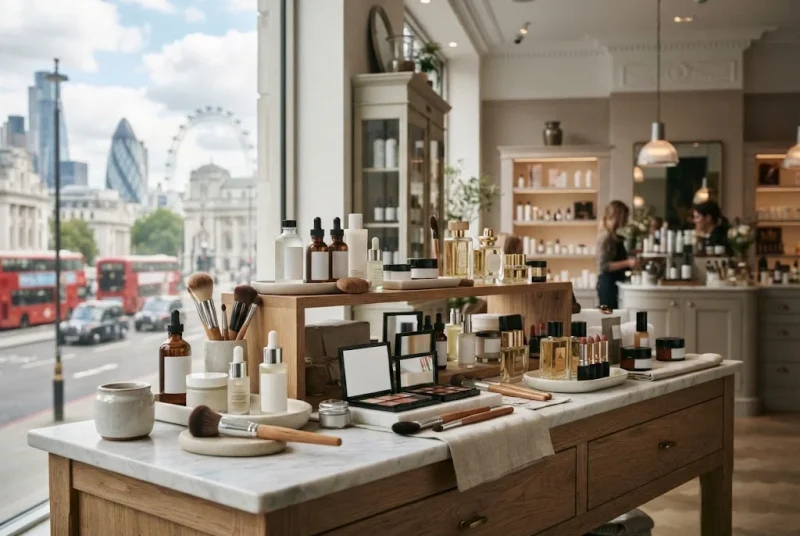

The UK beauty industry is a diverse economic sector spanning skincare, cosmetics, fragrance, haircare, personal care, salons, spas, retail and professional beauty services. From established British names to independent brands and specialist businesses, beauty has become closely connected with retail, digital commerce, wellness, fashion and consumer lifestyle trends across the country. At the same time, businesses must respond to changing customer expectations, product safety requirements and an increasingly competitive marketplace.
Understanding the sector therefore involves more than looking at cosmetics alone. Its development reflects how consumers discover products, how brands communicate value, how regulations protect customers and how businesses adapt to new expectations around personalisation, sustainability and digital shopping.
How Important Is the UK Beauty Industry?
Beauty makes a significant contribution to the British economy. The British Beauty Council reported that beauty and personal care activity across professional services, products and retail contributed £28.4 billion to UK GDP in 2024. The organisation has also highlighted the international importance of British beauty, reporting £4.3 billion in exports by UK beauty and personal care manufacturers in 2024.
However, the economic footprint extends well beyond manufacturers. The sector includes retailers, ecommerce businesses, hairdressers, beauty salons, spas, makeup professionals, cosmetic formulators, distributors, marketers and many other specialist service providers.
This broad ecosystem helps explain why changes within beauty can affect everything from high-street retail to independent ecommerce businesses and professional services.
What Makes Up the UK Beauty Market?
The UK beauty market can be divided into several overlapping areas. Skincare and cosmetics are highly visible categories, but fragrance, haircare, toiletries, grooming products and professional treatments are equally relevant to the wider industry.
At the premium end, luxury beauty brings together prestige skincare, high-end cosmetics, fine fragrance and specialist beauty experiences. Meanwhile, the mass and mid-market segments make beauty accessible through supermarkets, pharmacies, department stores, specialist retailers and online platforms.
Professional beauty adds another dimension. Hair salons, nail businesses, spas, facial specialists and other beauty service providers generate economic activity that cannot be understood purely through retail product sales.
Consequently, discussions about the UK cosmetics industry should distinguish between cosmetic products themselves and the broader beauty economy in which those products are sold, promoted and used.
Major UK Beauty Market Trends
Beauty changes quickly because purchasing decisions are strongly influenced by lifestyle, culture, technology and personal preferences. Nevertheless, several broader developments are shaping how UK beauty businesses approach their customers.
More Selective Beauty Spending
Consumers do not always shop within a single price category. Someone may buy an affordable cleanser while investing considerably more in a favourite fragrance or premium serum.
This creates a mixed market where value and premium products can coexist within the same routine. For brands, the challenge is to demonstrate why a particular product deserves its price rather than assuming consumers will associate a higher cost with greater quality.
Skincare Remains an Important Category
Skincare has become an increasingly sophisticated part of everyday beauty routines. Consumers can choose from cleansers, serums, moisturisers, facial oils, masks, exfoliating products and targeted formulations designed around different preferences.
Greater choice also means shoppers need clearer information. Brands that explain ingredients, intended use and product positioning in understandable language can make it easier for customers to evaluate whether a product belongs in their routine.
Beauty Discovery Has Become Digital
Consumers can now encounter a product through search engines, social platforms, online publications, influencers, retailers or direct brand channels before ever seeing it in a physical shop.
As a result, online visibility has become commercially important. Brands and retailers increasingly need useful product information, educational content and strong search visibility alongside traditional advertising. This also increases the importance of specialist strategies such as beauty SEO for businesses seeking sustainable organic discovery.
Personalisation and Individual Expression
Modern beauty is less dependent on one universal definition of what people should look like. Consumers increasingly build routines around personal preferences, skin needs, aesthetic choices and lifestyle considerations.
That shift can be seen across makeup, skincare, fragrance and haircare. It gives brands an opportunity to serve more specific audiences, although it also requires clearer positioning because consumers have an enormous number of alternatives.
UK Cosmetics Regulations and Product Safety
Regulation is a fundamental part of the UK beauty industry because cosmetic products are used directly on the body. Businesses placing cosmetics on the market must understand which regulatory framework applies to them and should not treat compliance as an afterthought.
Official GOV.UK guidance for cosmetic businesses explains the requirements for cosmetic products supplied to consumers in Great Britain, meaning England, Scotland and Wales.
Among the central requirements is the Responsible Person. Cosmetic products made available to consumers in Great Britain must have a Responsible Person responsible for ensuring that relevant safety measures and legal obligations are met.
The Responsible Person must also ensure that appropriate product information is maintained and that required notifications are completed before applicable products are made available to consumers.
Product Information Files and Safety
For cosmetics supplied in Great Britain, the Responsible Person must maintain an up-to-date Product Information File, commonly known as a PIF. Government guidance states that this includes information such as the product description, product safety report and information concerning good manufacturing practice.
The safety assessment is particularly important because cosmetic products made available to consumers must be safe for human health when used as intended.
Cosmetic Product Notifications
Before a cosmetic product is made available in Great Britain, required information must be submitted to the Office for Product Safety and Standards through the Submit Cosmetic Product Notifications service.
This notification system gives regulators information about products placed on the market. Government data published in July 2026 reported 861,686 notifications to the system as of 28 May 2026, submitted by 24,112 registered Responsible Persons.
Labelling Requirements
Cosmetic labels are another important part of compliance. Depending on the product and applicable requirements, information can include the Responsible Person’s name and address, weight or volume, precautions, product identification, intended function and ingredients.
Businesses should use current official guidance when preparing products for market because regulations and technical requirements can change. Northern Ireland also has distinct considerations, so businesses should not automatically assume that the Great Britain framework applies in exactly the same way throughout the entire UK.
Opportunities for UK Beauty Businesses
The size and diversity of the sector create opportunities for businesses at several levels. A company does not necessarily need to compete as a broad mass-market brand. Specialist positioning can allow smaller businesses to concentrate on particular audiences, product categories or customer needs.
Independent skincare brands, specialist haircare businesses, fragrance companies, salons, beauty professionals, ecommerce retailers and editorial publishers can all participate in different parts of the beauty economy.
British businesses may also look internationally. According to the British Beauty Council, UK beauty and personal care manufacturers exported £4.3 billion of products in 2024. Exporting introduces additional regulatory, distribution and marketing considerations, but it demonstrates that the commercial opportunity for British beauty is not confined to domestic shoppers.
The Role of Content and Publishing in Beauty
Beauty is an information-rich category. Before purchasing a product, consumers may want to understand ingredients, application, finish, suitability, comparisons or differences between similar options.
That makes editorial content valuable throughout the customer journey. Useful guides can answer questions that cannot be addressed effectively through a short product description.
High-quality beauty writing can also help publishers and businesses explain complicated topics without overwhelming readers. Reviews, educational articles, buying guides and trend analysis can each serve different search intentions while contributing to broader topical authority.
However, beauty publishers need to distinguish useful information from exaggerated marketing. Claims should be proportionate, products should be described accurately and commercial relationships should be handled transparently.
Challenges Facing the UK Cosmetics Industry
Growth opportunities do not remove the challenges faced by beauty businesses. Competition is intense, particularly online, where consumers can compare numerous products and retailers within minutes.
Customer acquisition can also become expensive when businesses rely heavily on paid promotion. Building brand recognition through organic search, editorial coverage, repeat customers and direct relationships can therefore provide valuable diversification.
Compliance creates another responsibility. Manufacturers, importers and other relevant businesses must understand their obligations rather than assuming a product can be sold simply because similar products already exist in the market.
Sustainability is also likely to remain part of industry discussion. Packaging, sourcing, supply chains and product waste create difficult questions for an industry where visual presentation has traditionally played an important commercial role.
What Is the Outlook for the UK Beauty Industry?
The UK beauty industry outlook is likely to be shaped by the interaction between consumer demand, digital discovery, regulation, innovation and changing expectations around value.
Premium beauty should remain relevant, but consumers may become increasingly selective about where they spend more. At the same time, accessible products can compete through formulation, convenience and strong positioning rather than attempting to imitate luxury brands.
Digital channels will continue to influence product discovery. Search visibility, ecommerce experiences, social media and authoritative editorial content give even relatively small brands ways to reach targeted audiences without relying exclusively on traditional retail distribution.
Regulatory awareness will remain essential. Businesses launching cosmetics need to account for safety assessment, product information, notification, labelling and other applicable requirements from the beginning rather than addressing compliance only when a product is ready to launch.
Why the UK Beauty Industry Remains a Dynamic Market
The UK beauty industry combines consumer products, professional services, creativity, science, retail and digital commerce in a way few lifestyle sectors do. Its economic significance is substantial, while the range of businesses involved makes it considerably broader than the cosmetics shelves visible to consumers.
For shoppers, greater competition means more choice across skincare, makeup, fragrance, haircare and personal care. For businesses, however, that choice raises the standard required to stand out.
Companies that understand their audience, communicate clearly, meet regulatory responsibilities and offer genuine value are better positioned to participate in the industry’s continued development. As beauty habits evolve, the strongest opportunities are likely to emerge where credible products, useful information and memorable customer experiences come together.
