
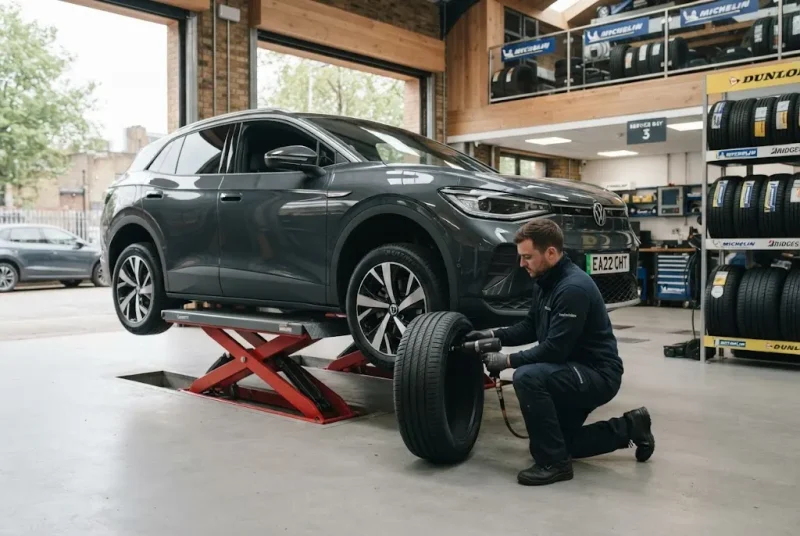

Choosing the right tyre services can do more than keep a vehicle safe and roadworthy. For UK drivers, responsible tyre fitting, timely replacement, careful maintenance and proper recycling can also support more sustainable motoring. From selecting tyres with suitable rolling resistance to ensuring worn tyres enter an appropriate recovery route, everyday tyre decisions can influence both vehicle efficiency and resource use.
Eco-friendly tyre care is not about choosing environmental credentials over safety or performance. Instead, it is about taking a broader view of the tyre lifecycle. The most sustainable approach is usually to fit the correct tyres, maintain them properly, replace them when necessary and make sure old tyres are handled responsibly.
Why Tyre Services Matter for Sustainable Motoring
Tyres are one of the few parts of a car that remain in continuous contact with the road. Their condition affects handling, braking, comfort, noise and rolling resistance. Consequently, the way tyres are selected and maintained can contribute to the overall efficiency of a vehicle.
Professional tyre services can help drivers avoid unnecessary replacements while identifying problems such as uneven wear, incorrect pressure or alignment issues. Keeping a suitable set of tyres in good condition can extend their useful life and reduce the frequency with which new materials are required.
There is also an important safety consideration. A tyre should never be kept in service simply because extending its life appears more environmentally friendly. Once it reaches the end of its safe usable life, replacement is necessary. Sustainability works best when it is combined with proper vehicle safety and responsible maintenance.
How Eco-Friendly Tyre Services Work
Eco-friendly tyre services take the complete tyre lifecycle into account. Instead of focusing only on selling and fitting a new set of tyres, a responsible approach considers what happens before, during and after the tyre is used.
Choosing the Right Tyres
The first step is selecting tyres that match the vehicle, driving conditions and manufacturer’s requirements. A tyre that is unsuitable for the vehicle can compromise safety and may wear faster, creating unnecessary waste.
Drivers can also consider information provided through tyre labelling. In Great Britain, tyre labels provide information about fuel efficiency, wet grip and external noise. Fuel-efficiency information is linked to rolling resistance, allowing consumers to compare this aspect of tyre performance when making a purchase. UK tyre labelling guidance from the Driver and Vehicle Standards Agency explains the information consumers can expect to see.
Professional Tyre Fitting
Correct tyre fitting is an essential part of responsible tyre ownership. A professionally fitted tyre should be appropriate for the wheel and vehicle, correctly positioned and inflated to the required pressure.
Good tyre fitting also gives drivers an opportunity to identify issues that could shorten tyre life. Problems with wheel alignment, suspension components or uneven loading can contribute to irregular tread wear. Addressing these issues can help prevent premature replacement.
Regular Tyre Maintenance
Maintenance is often the simplest way to make tyre ownership more efficient. Checking tyre pressures regularly can help drivers identify under-inflation before it becomes a persistent problem. Tread condition and visible damage should also be checked as part of routine vehicle care.
Drivers who notice unusual vibration, steering changes, uneven wear or repeated pressure loss should arrange a professional assessment rather than continuing to use the tyres without investigation.
Low Rolling Resistance and Vehicle Efficiency
Low rolling resistance is an important consideration when comparing tyre options. Rolling resistance describes the energy lost as a tyre moves against the road. A tyre with lower rolling resistance can require less energy to move the vehicle, which can contribute to improved fuel efficiency in suitable applications.
The Vehicle Certification Agency explains that rolling resistance is associated with tyre fuel-efficiency ratings and that reducing rolling resistance can reduce fuel consumption. Its guidance also makes clear that tyre choice should be considered alongside other factors, particularly wet-grip performance and safety.
This means drivers should not simply choose a tyre because it has the lowest possible rolling resistance. A sensible comparison considers the complete tyre label and the vehicle’s requirements. Wet grip, noise and fuel efficiency all provide useful information when assessing different options.
For electric vehicles, tyre selection can also be particularly relevant because efficiency affects usable energy consumption and driving range. However, the same principle applies: tyres must remain appropriate for the vehicle, load and driving conditions rather than being selected on environmental characteristics alone.
Tyre Recycling and the End of the Tyre Lifecycle
Tyre recycling is another important part of sustainable tyre services. Once tyres are no longer suitable for road use, they become part of a waste stream that needs to be managed responsibly.
End-of-life tyres can enter recovery and treatment processes rather than simply being discarded. Depending on the treatment route and material recovered, tyre components can be processed for use in secondary applications. The UK regulatory framework includes specific requirements for facilities involved in storing and mechanically treating end-of-life tyres for recovery.
This makes the final stage of the tyre lifecycle just as important as the purchasing decision. Drivers should use reputable tyre businesses and ask how removed tyres are handled. A responsible service provider should have an appropriate route for the tyres it removes from vehicles.
Proper disposal also matters because waste tyres can create environmental and safety risks when they are handled illegally or irresponsibly. The Environment Agency has strengthened controls and traceability around waste tyre exports and recovery, highlighting the importance of environmentally sound treatment throughout the waste chain.
When Should Tyre Replacement Be Considered?
Tyre replacement should be based on safety, condition and suitability rather than an arbitrary desire to upgrade. A tyre may need replacing because of tread wear, damage, age-related deterioration or repeated problems that make continued use inappropriate.
Replacing tyres before they become unsafe can prevent a much larger problem later. However, replacing tyres unnecessarily can also increase material consumption and cost. The goal is therefore to keep tyres in safe service for an appropriate period while avoiding use beyond their condition limits.
A professional inspection can help identify whether replacement is genuinely required. It can also reveal whether an underlying mechanical problem is responsible for abnormal wear. Fixing the underlying issue can help the next set of tyres last longer.
How to Make Tyre Services More Sustainable
Drivers do not need to completely change their vehicles or driving habits to make tyre ownership more responsible. Several practical decisions can make a difference over the full tyre lifecycle.
- Choose the correct specification: Select tyres that meet the vehicle manufacturer’s requirements and suit the intended use.
- Compare tyre labels: Consider fuel efficiency, wet grip and external noise rather than focusing on one characteristic alone.
- Check pressures: Maintain the recommended tyre pressure and investigate persistent pressure loss.
- Monitor wear: Look for uneven tread wear, visible damage and other signs that may require professional attention.
- Use professional fitting: Correct installation helps support safety and can reduce avoidable wear.
- Fix underlying faults: Alignment, suspension or steering problems can cause premature tyre wear.
- Replace tyres responsibly: When tyres reach the end of their safe life, use an appropriate tyre replacement service.
- Ask about recycling: Find out how removed tyres are handled after replacement.
Tyre Services and the Wider Vehicle Maintenance Picture
Tyres should not be treated as an isolated part of vehicle maintenance. Their condition can provide useful clues about the wider state of a vehicle. Uneven wear, for example, may indicate alignment or suspension issues that deserve further investigation.
This is why sustainable maintenance works best as a connected process. Drivers can combine regular servicing with appropriate vehicle inspection to identify developing problems before they lead to unnecessary component replacement.
For motorists who are concerned about managing maintenance costs over a longer period, planning routine work can also make ownership more predictable. Options such as repair finance may be relevant when an essential repair or maintenance bill arrives at an inconvenient time, although any finance arrangement should be assessed carefully against its terms and total cost.
What Makes Sustainable Tyres a Sensible Choice?
The phrase sustainable tyres can cover several different considerations. It may refer to tyres designed with efficiency in mind, products that incorporate recycled or responsibly sourced materials, longer-lasting tyre designs or options that support lower resource consumption over their useful life.
However, sustainability claims should be considered carefully. A tyre’s environmental profile is not determined by a single feature. Durability, manufacturing, performance, efficiency, safety and end-of-life treatment can all form part of the wider picture.
For consumers, the most practical approach is to focus on verified product information and reputable suppliers rather than relying on vague environmental marketing. The best tyre is one that is suitable for the vehicle, performs safely in the conditions in which it is used and can be maintained and replaced responsibly.
Building a Better Tyre Lifecycle
A more sustainable tyre lifecycle begins before the tyre is fitted and continues until it leaves the vehicle. Choosing an appropriate product, maintaining correct pressures, monitoring tread wear and addressing mechanical faults can all help maximise useful service life.
When replacement eventually becomes necessary, responsible tyre services can help ensure that old tyres enter an appropriate recovery or disposal route. This creates a more complete approach to sustainability than simply buying a tyre marketed as environmentally friendly.
For UK drivers, the practical lesson is straightforward: sustainability and road safety should work together. Good tyre fitting, sensible maintenance, informed replacement decisions and responsible recycling can reduce avoidable waste while helping vehicles remain safe and efficient.
Final Thoughts on Eco-Friendly Tyre Services
Eco-friendly tyre services are ultimately about making better decisions throughout the tyre lifecycle. Drivers can start by choosing suitable tyres, comparing efficiency information, maintaining correct pressures and dealing with wear or damage before it becomes a serious problem.
When replacement is necessary, selecting a suitable tyre and using a professional fitting service helps maintain safety. Making sure removed tyres are handled through responsible recovery or recycling routes then completes the process.
By treating tyres as part of the wider vehicle maintenance system rather than as disposable components, motorists can support resource efficiency, reduce avoidable replacements and make more informed choices about sustainable motoring in the UK.
