
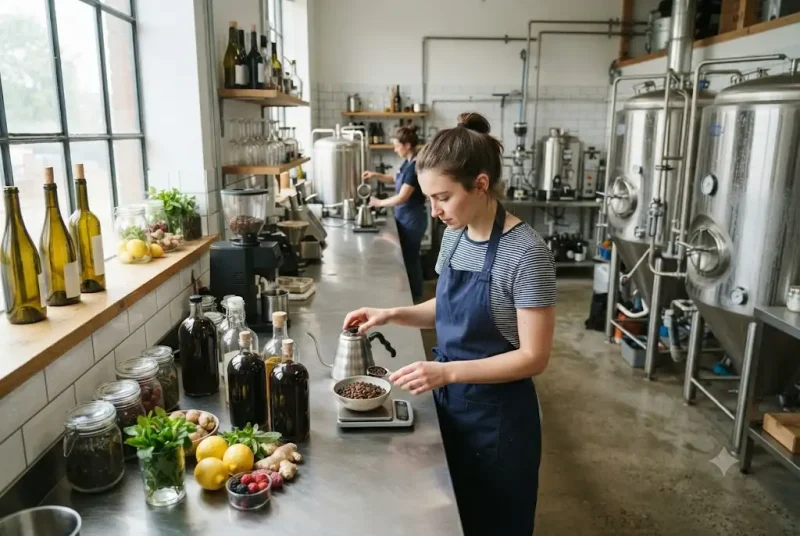

Learning key Beverage Industry Terms can help you better understand drink production, hospitality, brewing, distilling, and everyday food service conversations. Whether you’re passionate about coffee, wine, beer, soft drinks, or cocktails, knowing these industry terms makes menus, recipes, product labels, and professional discussions much easier to follow. This guide explains the most common terminology using UK English while highlighting practical examples.
Why Beverage Industry Terms Matter
The beverage industry covers everything from water and soft drinks to wine, beer, spirits, coffee, tea, and functional beverages. Manufacturers, restaurants, cafés, breweries, wineries, and retailers all use specialised vocabulary to describe production processes, ingredients, packaging, and serving methods.
If you’re new to drink terminology, you may also find our guide on food and beverage vocabulary useful before exploring more technical concepts. Later, our articles on flavourful meaning and decant meaning expand on taste descriptions and wine service terminology.
Distill or Distil: Which Spelling Is Correct?
One of the most common questions in beverage production is whether to write distill or distil.
Distil (UK English)
In British English, distil is the preferred spelling. It refers to separating liquids through heating and condensation, a process commonly used to produce spirits such as whisky, gin, and vodka.
Example: “The distillery uses traditional methods to distil premium gin.”
Distill (US English)
Distill is the American English spelling of the same word. The meaning remains identical, but UK publications generally prefer distil.
Liquify or Liquefy: Understanding the Difference
Another spelling question often appears in recipes and manufacturing.
Liquefy
Liquefy is the standard spelling recognised in both British and American English. It means to turn a solid or gas into a liquid or make something more fluid.
Example: “Heat helps liquefy the syrup before mixing.”
Liquify
Liquify is considered an accepted variant by some dictionaries but appears less frequently in professional publications. Most UK editorial style guides recommend using liquefy for consistency.
What Does “Liq” Mean?
Liq is an abbreviation that may appear in inventory systems, product catalogues, or manufacturing documents. Depending on the context, it usually stands for liquid or liquor. Because abbreviations can vary between businesses, the surrounding context is important.
In formal writing intended for customers, spelling out the complete word is usually clearer.
Concoction: Meaning and Synonyms
A concoction refers to a mixture of different ingredients combined to create a drink or another preparation. The word often appears when describing cocktails, herbal drinks, smoothies, or creative recipes.
Concoction Synonym
- Blend
- Mixture
- Combination
- Brew
- Creation
- Preparation
Another Word for Concoction
Depending on the context, writers may choose words such as mixture, blend, recipe, or brew. Hospitality professionals generally select terminology that best matches the beverage being described.
Bottle Synonym
The word bottle usually refers to the container used to package beverages. However, depending on the context, alternatives include:
- Container
- Flask
- Carafe (for serving)
- Decanter (for certain beverages)
- Vessel
Each term has its own specific meaning, so they should not always be used interchangeably.
Pour Synonym
In restaurants and beverage service, pour is one of the most frequently used action verbs.
Common alternatives include:
- Serve
- Dispense
- Fill
- Transfer
- Decant (for wine)
For example, bartenders pour drinks into glasses, while wine professionals may decant older wines before serving.
Common Beverage Production Vocabulary
Fermentation
The natural process where yeast converts sugars into alcohol or carbon dioxide. Fermentation is essential for producing beer, wine, cider, and many other beverages.
Carbonation
The process of adding carbon dioxide to create fizzy drinks such as sparkling water and soft drinks.
Infusion
Steeping ingredients like herbs, tea leaves, coffee, or fruit in liquid to extract flavour.
Filtration
Removing unwanted particles from beverages to improve clarity and consistency.
Pasteurisation
A controlled heating process that helps reduce harmful microorganisms while extending shelf life.
Using Beverage Industry Terms Correctly
Many beverage terms have very specific meanings, particularly in manufacturing and hospitality. Using the correct terminology helps improve communication between producers, suppliers, retailers, and customers.
For example, understanding the difference between distil and ferment prevents confusion, as fermentation creates alcohol while distillation concentrates it.
How Food Enthusiasts Benefit from Learning Beverage Terminology
Even if you don’t work in hospitality, understanding beverage terminology improves your appreciation of food and drink. It becomes easier to read tasting notes, compare products, understand recipes, and interpret restaurant menus.
As this content cluster grows, you’ll also benefit from learning flavour descriptions, beverage consumption vocabulary, and wine service terminology to build a complete understanding of food and drink language.
Final Thoughts
Mastering Beverage Industry Terms helps food enthusiasts, hospitality professionals, students, and everyday consumers understand how drinks are produced, packaged, served, and described. From knowing why British English prefers distil to recognising terms like liquefy, concoction, and pour, these expressions provide a strong foundation for exploring the wider world of beverages.
For additional information on beverage production standards and food safety terminology, visit the UK Food Standards Agency.
